
The Ocean: The Silent Hero of Our Planet
When was the last time you stood by the sea?
Perhaps it was during a family vacation.
Your children played with the sand.
You collected seashells.
You watched the waves and took photographs.
Then you returned home.
For most of us, the ocean is a tourist destination.
A place for holidays.
A place for relaxation.
But after we leave the beach, we rarely think about it again.
Yet the ocean continues working for us every second of every day.
It helps produce the oxygen we breathe.
It helps bring the rain that grows our food.
It regulates the Earth’s climate.
It supports millions of jobs and feeds billions of people.
The ocean is not simply a body of water.
It is one of Earth’s greatest life-support systems.
That is why every year on 8 June, the world observes World Ocean Day—to remind humanity that protecting the ocean means protecting ourselves.
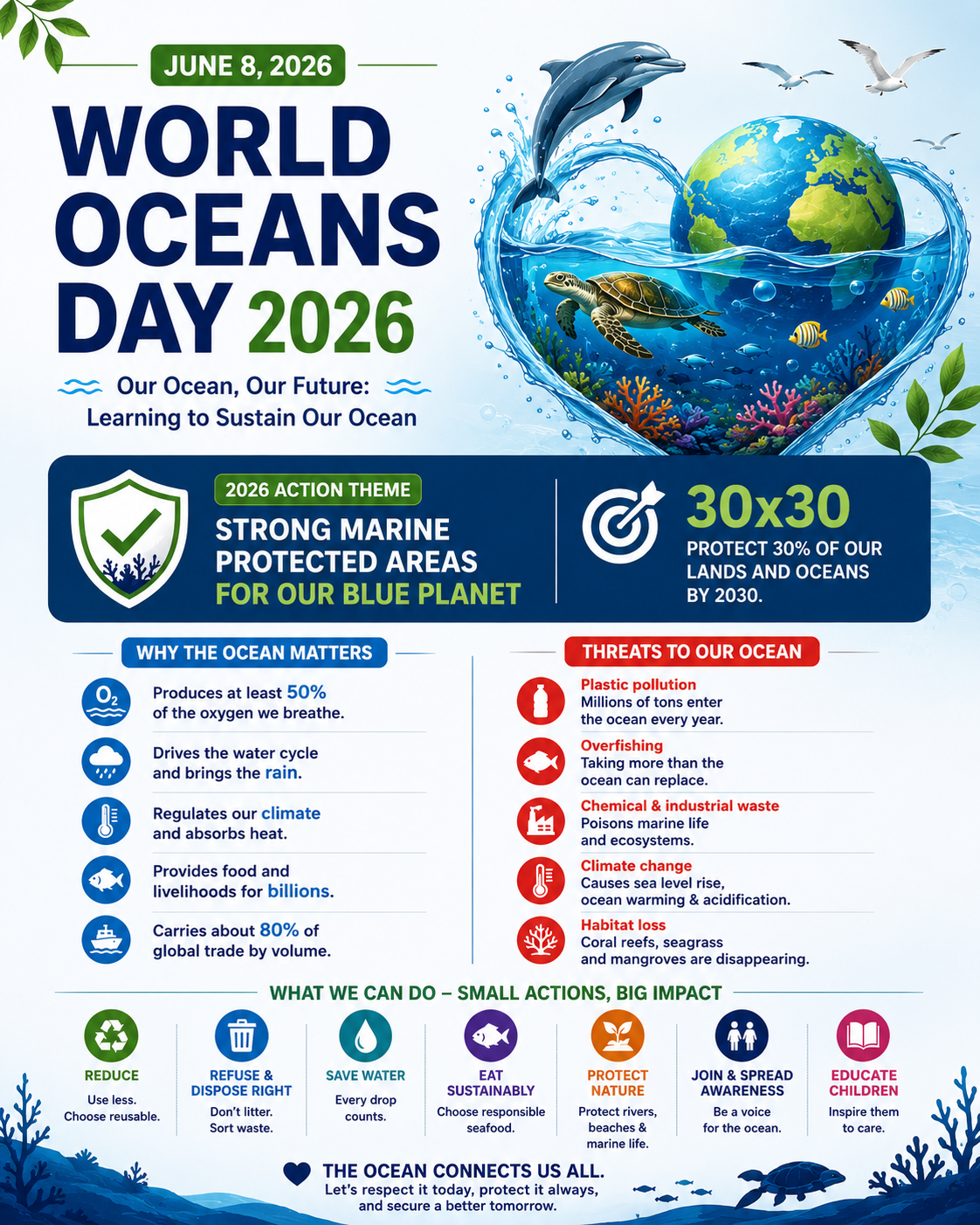
2026 Action Theme
Strong Marine Protected Areas for Our Blue Planet
This year’s action theme carries an important message.
Around the world, countries have agreed that by 2030, at least 30% of our lands and oceans should be effectively protected and managed.
This global goal is often called 30×30. But what does that mean?
Imagine a wildlife sanctuary where animals can live, reproduce, and recover without constant disturbance.
Marine Protected Areas are similar—but beneath the sea.
These protected areas help conserve:
- Coral reefs
- Fish breeding grounds
- Sea turtles
- Dolphins
- Sharks
- Seagrass meadows
- Deep-sea ecosystems
The goal is not to stop people from using the ocean.
The goal is to use it wisely so that nature can recover and future generations can benefit too.
The message of 2026 is simple: A healthy ocean requires strong protection, responsible management, and collective action.
The Ocean Is Bigger Than We Imagine
The ocean covers more than 70% of Earth’s surface.
Human civilization began and developed around water.
Even today, a large share of the world’s population lives near coastlines because oceans provide food, transportation, trade, and opportunities for life and development.
But even if you live hundreds of kilometers away from the coast, your life is still connected to the ocean.
The Ocean Gives Us the Air We Breathe
Many people believe forests produce all the oxygen we breathe.
Forests are incredibly important.
But tiny marine organisms living in the ocean produce roughly half of the oxygen generated on Earth.
Every second breath we take is connected to the ocean.
The next time you take a deep breath, remember that the ocean is helping you.
The Ocean Brings Rain
Think about a farmer waiting for rain.
Think about a reservoir supplying water to a city.
Think about the rice, vegetables, fruits, and coconut trees that feed our families.
The journey begins in the ocean.
Ocean water evaporates.
Clouds form.
Rain falls.
Rivers flow.
Fields grow crops.
Food reaches our homes.
Without healthy oceans, the water cycle that sustains life would not function as we know it.
The Ocean Regulates Our Climate
The ocean absorbs enormous amounts of heat from the sun.
It acts like Earth’s natural temperature regulator.
Without oceans:
- Summers would become even hotter.
- Weather would become more extreme.
- Climate patterns would become less stable.
The ocean quietly protects life every single day.
The Ocean Supports Our Economy
The ocean supports:
- Fishing
- Shipping
- Ports
- Tourism
- International trade
- Offshore energy
- Scientific research
Much of the goods we buy have travelled across the sea before reaching us.
Millions of families earn their livelihoods because of healthy oceans.
The Ocean Still Holds Great Mysteries
Scientists continue discovering new marine species.
Many medicines of the future may come from organisms living beneath the sea.
The ocean is one of the least explored parts of our planet.
Protecting it also means protecting future scientific discoveries.
Then Why Is the Ocean in Trouble?
The ocean itself is not creating the problem.
Humans are.
For decades, we have taken more from nature than it can replenish.
Pollution Often Starts on Land
Many people think ocean pollution happens at the beach.
Actually, it often begins far away.
Imagine someone throws a plastic bottle onto the roadside.
Rain carries it into a drain.
The drain flows into a canal.
The canal reaches a river.
The river eventually reaches the ocean.
The person may never even visit the sea.
Yet their waste may end up there.
Protecting our streets, ponds, lakes, and rivers also protects the ocean.
Plastic Pollution
Plastic does not simply disappear.
Over time, it breaks into tiny particles called microplastics.
These particles are now found in:
- Oceans
- Fish
- Sea salt
- Drinking water
- Even the human body
The pollution we create eventually returns to us.
Nature always completes the circle.
Overfishing
Fish populations need time to reproduce.
When humans catch fish faster than nature can replace them, marine ecosystems become unbalanced.
Protecting breeding areas helps ensure future food security and healthy oceans.
Climate Change and Rising Sea Levels
Many people ask:
“Is the sea really rising?” Yes.
As the Earth warms:
- Glaciers melt.
- Ice sheets lose mass.
- Ocean water expands because warm water occupies more space.
Together, these changes raise sea levels.
This does not mean cities suddenly disappear overnight.
But over time it increases the risk of:
- Coastal flooding
- Beach erosion
- Saltwater entering freshwater sources
- Damage during storms and cyclones
For countries like India with long coastlines, this is an important challenge.
The Ocean Is Also Becoming More Stressed
Scientists have observed:
- Declining coral reefs
- Depleted populations of many large fish species
- Increasing pollution
- Warming oceans
- Ocean acidification
These changes affect biodiversity, food security, economies, and human well-being.
What Can Governments Do?
Governments should:
- Strengthen Marine Protected Areas.
- Reduce marine pollution.
- Enforce environmental laws.
- Support scientific research.
- Promote sustainable fisheries.
- Cooperate internationally to protect the High Seas.
What Can Businesses Do?
Businesses should:
- Reduce plastic packaging.
- Prevent waste from entering waterways.
- Improve recycling systems.
- Adopt sustainable supply chains.
- Invest in cleaner technologies.
- Protect marine ecosystems rather than exploit them.
Economic growth should work with nature, not against it.
What Can Schools Do?
Schools can:
- Teach ocean science.
- Organize clean-up drives.
- Encourage environmental clubs.
- Reduce single-use plastics.
- Inspire curiosity about marine life.
Education creates responsible citizens.
What Can Parents Teach Children?
Parents shape tomorrow’s guardians of the planet. Teach children to:
- Never throw waste into streets or rivers.
- Carry reusable water bottles.
- Avoid unnecessary plastic.
- Respect beaches and nature.
- Save water at home.
- Learn about marine animals.
- Understand that rivers eventually reach the sea.
A child who learns these habits today may protect the ocean tomorrow.
What Can Each of Us Do?
We do not need to become scientists to help.
Simple actions matter:
✓ Refuse unnecessary plastic bags.
✓ Carry reusable bottles and bags.
✓ Segregate waste.
✓ Never litter.
✓ Participate in clean-up activities.
✓ Support sustainable seafood.
✓ Plant trees and protect local water bodies.
✓ Use resources responsibly.
Small actions repeated by millions of people become a powerful movement.
The Ocean Connects Everyone
Whether you live beside the coast or deep inland,
whether you are a student, farmer, teacher, engineer, doctor, entrepreneur, or retiree,
the ocean is part of your life.
It helps create the air you breathe.
It helps bring the rain that grows your food.
It supports the climate that makes life possible.
It connects nations, economies, and ecosystems.
Final Message
The next time you visit the beach, do not see only the waves.
See the oxygen that sustains you.
See the rain that feeds your crops.
See the livelihoods of millions of families.
See the future of our children.
The ocean does not ask us for applause.
It asks us for responsibility.
The greatest gift we can give future generations is not cleaner beaches alone, but a healthier ocean.
Because protecting the ocean is not about saving water.
It is about protecting life itself.
World Ocean Day 2026
Strong Marine Protected Areas for Our Blue Planet
The ocean belongs to everyone. Protecting it is everyone’s responsibility.
Tamil Version Below.
உலக பெருங்கடல் தினம் 2026
பெருங்கடல் – நாம் நினைப்பதை விட நம் வாழ்க்கைக்கு மிகவும் முக்கியமானது
கடைசியாக நீங்கள் எப்போது கடற்கரைக்குச் சென்றீர்கள்?
ஒருவேளை குடும்பத்துடன் சுற்றுலா சென்றிருக்கலாம்.
குழந்தைகள் மணலில் விளையாடியிருக்கலாம்.
அலைகளை ரசித்து புகைப்படங்கள் எடுத்திருக்கலாம்.
அழகான சூரிய உதயத்தையோ அல்லது சூரிய அஸ்தமனத்தையோ பார்த்து மகிழ்ந்திருக்கலாம்.
நம்மில் பலருக்கு கடல் என்பது ஒரு சுற்றுலா இடம்.
ஓய்வெடுக்க ஒரு இடம்.
நினைவுகளை சேமிக்கும் ஒரு இடம்.
ஆனால் வீட்டிற்கு திரும்பிய பிறகு, அந்தக் கடலைப் பற்றி மீண்டும் எத்தனை முறை நினைக்கிறோம்?
உண்மையில், நாம் நினைக்காவிட்டாலும், பெருங்கடல் ஒவ்வொரு நொடியும் நமக்காக வேலை செய்து கொண்டே இருக்கிறது.
நாம் சுவாசிக்கும் காற்றுக்கும்,
நாம் சாப்பிடும் உணவுக்கும்,
நாம் பெறும் மழைக்கும்,
இந்த பூமியின் காலநிலைக்கும்,
பெருங்கடல் மிகப்பெரிய பங்களிப்பை வழங்குகிறது.
அதனால்தான் ஒவ்வொரு ஆண்டும் ஜூன் 8 அன்று உலகம் உலக பெருங்கடல் தினத்தை அனுசரிக்கிறது.
2026 செயல்பாட்டு கருப்பொருள்
“நமது பூமிக்காக வலுவான கடல் பாதுகாப்புப் பகுதிகள்”
இந்த ஆண்டின் செய்தி மிகவும் எளிமையானது.
நாம் காடுகளுக்கு சரணாலயங்களை உருவாக்குவது போல, கடலிலும் பாதுகாக்கப்பட்ட பகுதிகள் தேவை.
அவற்றை Marine Protected Areas (MPAs) என்று அழைக்கின்றனர்.
இவை பாதுகாக்க உதவுவது:
🐠 மீன்களின் இனப்பெருக்க பகுதிகள்
🐢 கடல் ஆமைகள்
🪸 பவளப்பாறைகள்
🐬 டால்பின்கள்
🌿 கடல் புல்வெளிகள்
மற்றும் எண்ணற்ற கடல்வாழ் உயிரினங்கள்.
உலக நாடுகள் இணைந்து 2030க்குள் குறைந்தது 30% நிலப்பரப்பையும் கடல் பகுதிகளையும் பாதுகாக்க வேண்டும் என்ற இலக்கை நிர்ணயித்துள்ளன. இது 30×30 என்ற இலக்காக அழைக்கப்படுகிறது.
இது மனிதர்களை கடலிலிருந்து விலக்குவதற்காக அல்ல.
எதிர்கால சந்ததியினருக்கும் ஆரோக்கியமான கடலை விட்டுச் செல்லுவதற்காக.
பெருங்கடல் ஏன் முக்கியம்?
🌍 இது பூமியின் 70%க்கும் மேற்பட்ட பகுதியை மூடியுள்ளது.
🌬️ நாம் சுவாசிக்கும் ஆக்சிஜனில் மிகப்பெரிய பங்கு கடலுடன் தொடர்புடையது.
🌧️ மழை சுழற்சியின் அடிப்படை கடலே.
கடல்
↓
ஆவியாகுதல்
↓
மேகங்கள்
↓
மழை
↓
ஆறுகள்
↓
விவசாயம்
↓
உணவு
↓
வாழ்க்கை
🌡️ கடல் பூமியின் வெப்பநிலையை சமநிலைப்படுத்துகிறது
கடல் மிகப்பெரிய இயற்கை வெப்பக் கட்டுப்பாட்டாளராக செயல்படுகிறது.
அது இல்லையெனில் உலகின் காலநிலை மிகவும் கடுமையாக மாறியிருக்கும்.
🍽️ கோடிக்கணக்கான மக்களின் வாழ்வாதாரம்
மீனவர்கள்,
துறைமுக தொழிலாளர்கள்,
கடல் சார்ந்த தொழில்கள்,
சுற்றுலாத்துறை,
சர்வதேச வர்த்தகம்—
இவை அனைத்தும் ஆரோக்கியமான பெருங்கடலை சார்ந்தவை.
பெருங்கடல் எப்படி மாசடைகிறது?
பலர் கடற்கரையில் தான் மாசுபாடு ஏற்படுகிறது என்று நினைக்கிறார்கள்.
ஆனால் உண்மை வேறு.
ஒருவர் சாலையில் ஒரு பிளாஸ்டிக் பாட்டிலை வீசுகிறார்.
↓
மழை அதை வடிகாலுக்கு கொண்டு செல்கிறது.
↓
வடிகால் கால்வாயை அடைகிறது.
↓
கால்வாய் ஆற்றை அடைகிறது.
↓
ஆறு கடலை அடைகிறது.
அதனால், நமது தெருக்களை சுத்தமாக வைத்திருப்பதும் கடலை பாதுகாப்பதே.
பிளாஸ்டிக் மாசுபாடு
பிளாஸ்டிக் மறைந்து போவதில்லை.
அது சிறிய துகள்களாக உடைந்து மைக்ரோ பிளாஸ்டிக் ஆக மாறுகிறது.
இவை இன்று:
- மீன்களில்
- கடல் உப்பில்
- குடிநீரில்
- மனித உடலிலும்
கண்டறியப்படுகின்றன.
இயற்கை எப்போதும் நாம் செய்ததை நமக்கே திருப்பித் தருகிறது.
அதிகப்படியான மீன்பிடித்தல்
இயற்கைக்கு மீன்களை மீண்டும் உருவாக்க நேரம் தேவை.
ஆனால் மனிதர்கள் அதைவிட வேகமாக பிடிக்கும்போது, கடல் உயிரியல் சமநிலை பாதிக்கப்படுகிறது.
காலநிலை மாற்றமும் கடல் மட்ட உயர்வும்
“கடல் மட்டம் உண்மையிலேயே உயருகிறதா?”
ஆம்.
பூமி வெப்பமடைகிறது.
↓
பனிப்பாறைகள் உருகுகின்றன.
↓
அதன் நீர் கடலுக்குச் செல்கிறது.
↓
வெப்பமான கடல் நீர் விரிவடைகிறது.
↓
கடல் மட்டம் உயர்கிறது.
இதன் விளைவுகள்:
- கடலோர வெள்ளம்
- கடற்கரை அரிப்பு
- உவர்நீர் உட்புகுதல்
- புயல்களின் தாக்கம் அதிகரித்தல்
இவை எதிர்காலத்திற்கு மிகப்பெரிய சவால்கள்.
நாம் என்ன செய்யலாம்?
✅ தேவையற்ற பிளாஸ்டிக் பயன்பாட்டை குறைப்போம்.
✅ குப்பையை எங்கு வேண்டுமானாலும் வீசாமல் சரியாக அகற்றுவோம்.
✅ ஆறுகள், குளங்கள் மற்றும் ஏரிகளை சுத்தமாக வைத்திருப்போம்.
✅ தண்ணீரை வீணாக்காமல் பயன்படுத்துவோம்.
✅ இயற்கையை மதிப்போம்.
✅ கடற்கரைக்கு செல்லும்போது குப்பையை திரும்ப எடுத்துச் செல்வோம்.
✅ சுற்றுச்சூழல் விழிப்புணர்வை மற்றவர்களுக்கும் பகிர்வோம்.
சிறிய செயல்கள் கோடிக்கணக்கான மக்களால் செய்யப்படும்போது மிகப்பெரிய மாற்றமாக மாறுகின்றன.
பெற்றோர்களுக்கும் ஆசிரியர்களுக்கும் ஒரு வேண்டுகோள்
இன்றைய குழந்தைகள்தான் நாளைய பூமியின் பாதுகாவலர்கள்.
அவர்களுக்கு கற்றுக்கொடுப்போம்:
🌱 இயற்கையை நேசிக்க.
🚯 குப்பை வீசக்கூடாது.
💧 தண்ணீரை சேமிக்க.
🌊 கடலும் ஆறும் ஒன்றோடொன்று இணைந்தவை என்பதை புரிந்துகொள்ள.
🐢 கடல்வாழ் உயிரினங்களையும் மதிக்க.
ஒரு நல்ல பழக்கம் ஒரு குழந்தையை மாற்றும்.
ஒரு தலைமுறையின் நல்ல பழக்கங்கள் உலகத்தை மாற்றும்.
இறுதி செய்தி
அடுத்த முறை நீங்கள் கடற்கரையில் அலைகளைப் பார்க்கும்போது,
அது வெறும் தண்ணீர் அல்ல என்பதை நினைவில் கொள்ளுங்கள்.
அது நீங்கள் சுவாசிக்கும் காற்றின் ஒரு பகுதி.
அது நீங்கள் சாப்பிடும் உணவின் ஒரு பகுதி.
அது உலகின் காலநிலையை சமநிலைப்படுத்தும் இயற்கையின் அதிசயம்.
பெருங்கடலை பாதுகாப்பது என்பது
மீன்களையோ அல்லது கடற்கரையையோ மட்டும் காப்பாற்றுவது அல்ல.
நமது எதிர்காலத்தையும், நமது குழந்தைகளின் எதிர்காலத்தையும் பாதுகாப்பதாகும்.
உலக பெருங்கடல் தினம் 2026
“நமது நீல பூமிக்காக வலுவான கடல் பாதுகாப்புப் பகுதிகள்”
பெருங்கடல் அனைவருக்கும் சொந்தமானது.
அதை பாதுகாப்பது நம் அனைவரின் பொறுப்பு.
 Lekshmana Perumal Murugan