
From burden to solutions – Safe food everywhere
Every day, we eat food to nourish our bodies, support our families, and build a better future. But there is one simple question that many of us never ask:
Is the food we eat safe?
Food should give us energy, health, and happiness. It should never become a source of disease. Yet, millions of people around the world fall sick every year because of unsafe food. Many lose their lives, and many more suffer long-term health problems that could have been prevented.
That is why June 7 is observed every year as World Food Safety Day by the World Health Organization (WHO) and the Food and Agriculture Organization (FAO) together with governments, scientists, food businesses, health professionals, and consumers across the world.
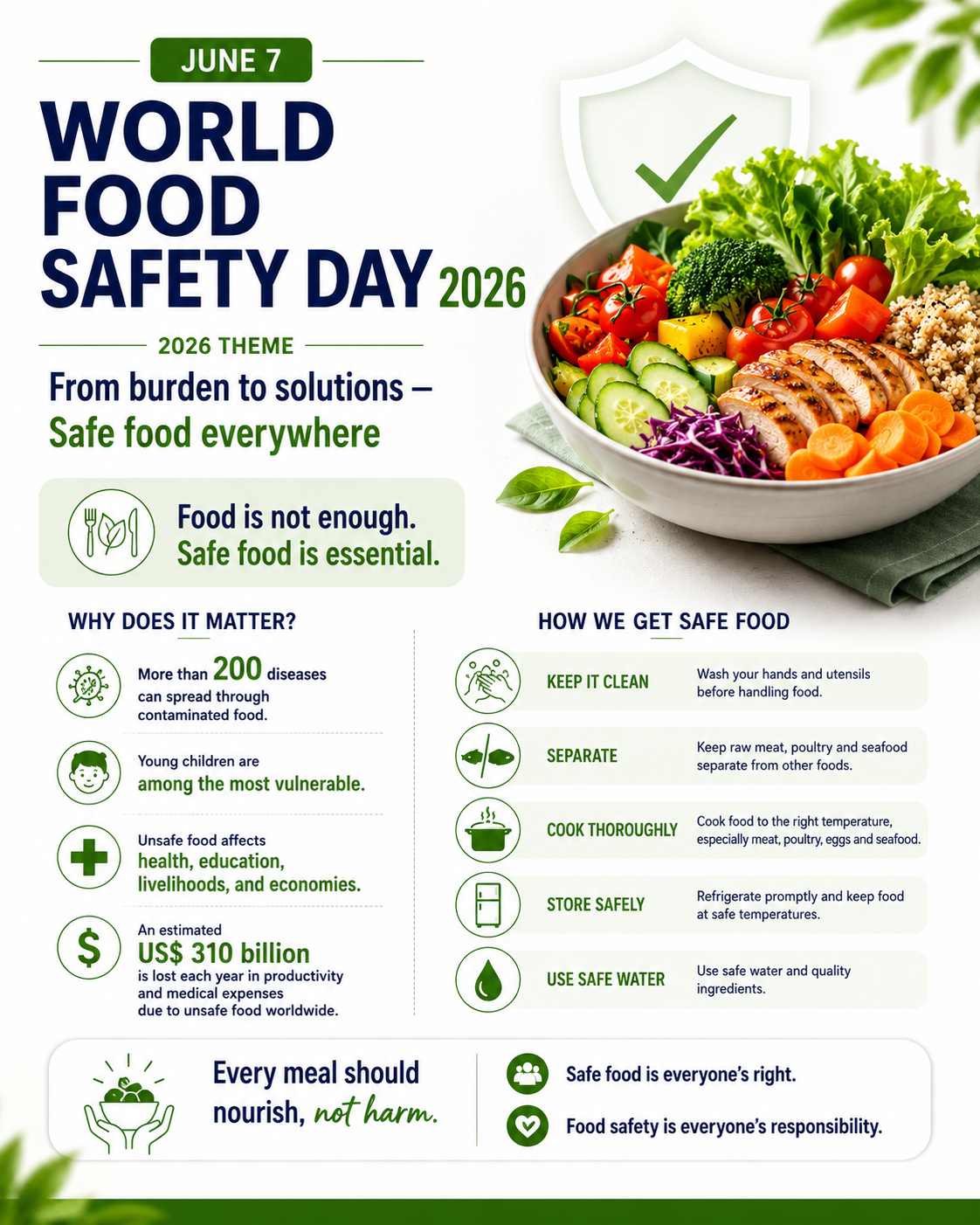
The purpose of this day is not simply to celebrate food but to remind everyone that food safety saves lives.
2026 Theme
From burden to solutions – Safe food everywhere
This year’s theme carries a powerful message.
For many years, science and data have shown us that unsafe food causes enormous health and economic burdens across the world. We already know the problem.
Now it is time to move from simply recognizing the burden to implementing practical solutions.
Instead of asking,
“How serious is the problem?”
we should ask,
“What can each one of us do to solve it?”
Because safe food is not created by one person or one organization. It requires cooperation from everyone involved in the journey of food—from the farm to the dining table.
Food safety, nutrition and food security are connected
Having enough food is important.
Having nutritious food is important.
But neither is complete without safe food.
Food safety, nutrition, and food security are inseparable. A healthy society cannot exist without all three.
A nutritious meal loses its value if it is contaminated.
The global burden
According to WHO estimates:
- Around 866 million people become ill every year after eating contaminated food.
- Approximately 1.52 million people die annually due to foodborne diseases.
- Nearly US$310 billion is lost globally each year through productivity losses and medical expenses.
- Children under 5 years of age account for approximately 29% of the global health burden caused by unsafe food, with around 143,000 deaths in 2021.
These numbers represent families, children, workers, students, and communities whose lives are affected by something that is often preventable.
Why does unsafe food matter?
Unsafe food does not only cause stomach pain or food poisoning.
It can affect:
- Public health
- Child development
- Education
- Family income
- National economies
- Tourism
- International trade
A single unsafe meal can affect an individual’s health, while large outbreaks can impact entire communities and countries.
More than 200 diseases can spread through unsafe food
Unsafe food contaminated by harmful bacteria, viruses, parasites, or chemicals can cause more than 200 different diseases, ranging from mild diarrhoea to severe infections and cancers.
Foodborne diseases create a vicious cycle:
Disease → Malnutrition → Poor health → Reduced productivity → Economic loss.
What makes food unsafe?
Food may become contaminated through many hazards.
Bacteria
Examples include:
- Salmonella
- Campylobacter
- Escherichia coli (E. coli)
- Listeria
- Shigella
These may cause:
- Fever
- Vomiting
- Diarrhoea
- Abdominal pain
- Severe infections
- Long-term complications
- Death in vulnerable individuals
Raw or undercooked poultry, unpasteurized milk, contaminated vegetables, and improperly handled foods are common sources.
Viruses
Food can transmit viruses such as:
- Norovirus
- Hepatitis A
- Hepatitis E
Contaminated water, raw seafood, frozen berries, and improperly handled food can spread these infections.
Parasites
Some parasites enter the body through contaminated food and may remain unnoticed for years before causing disease.
Certain parasitic infections may lead to epilepsy, liver disease, bile duct cancer, or complications during pregnancy.
Chemical hazards
Food may contain harmful chemicals including:
- Lead
- Arsenic
- Mercury
- Cadmium
- Pesticide residues
- Industrial pollutants
- Radioactive contaminants
- Natural toxins produced by moulds
Long-term exposure may contribute to:
- Cardiovascular diseases
- Kidney disease
- Developmental disorders
- Cancer
- Neurological problems
Climate change and food safety
Climate change is expected to increase food safety risks.
Higher temperatures, floods, droughts, and changing rainfall patterns influence:
- Food production
- Water quality
- Food storage
- Transportation
- Growth of harmful microorganisms
In today’s interconnected world, a local food safety problem can quickly become an international concern.
Food safety starts long before we eat
Many people think food safety begins in the kitchen.
Actually, it begins on the farm.
The journey includes:
👨🌾 Farmers
🌱 Agricultural practices
🏭 Food processors
🚚 Transporters
🏪 Retailers
🍽 Restaurants
👩🍳 Home kitchens
👨👩👧 Consumers
Every step matters.
One mistake anywhere along the chain can affect the final consumer.
What governments should do
Governments should:
- Make food safety a continuous national priority.
- Develop evidence-based policies.
- Strengthen food control systems.
- Rank risks and prioritize preventive actions.
- Improve surveillance and monitoring.
- Invest in scientific research.
- Use reliable data to guide decisions.
What food businesses should do
Food businesses should:
- Train employees regularly.
- Follow good hygiene practices.
- Implement food safety management systems such as HACCP where applicable.
- Identify and control hazards throughout production and distribution.
- Continuously monitor and improve food safety practices.
Safe food should never be compromised for speed or profit.
What health professionals should do
Health professionals should:
- Improve disease detection.
- Strengthen diagnostics.
- Report outbreaks quickly.
- Collaborate across sectors.
- Support awareness and prevention programmes.
Early detection saves lives.
What consumers can do
Consumers play one of the most important roles.
Simple habits can prevent many illnesses.
1. Keep food clean
- Wash hands before handling food.
- Keep utensils and surfaces clean.
- Maintain kitchen hygiene.
2. Separate raw and cooked food
- Avoid cross-contamination.
- Use separate cutting boards and utensils when possible.
3. Cook food thoroughly
- Cook meat, poultry, seafood, and eggs completely.
- Proper cooking destroys many harmful microorganisms.
4. Store food safely
- Refrigerate food promptly.
- Do not leave cooked food at room temperature for long periods.
- Maintain safe storage temperatures.
5. Use safe water and quality ingredients
- Drink safe water.
- Wash fruits and vegetables thoroughly.
- Purchase food from trusted sources.
- Check expiry dates.
- Avoid spoiled or damaged food.
Parents have a special responsibility
Children develop lifelong habits at home.
Teach them to:
- Wash hands before eating.
- Drink safe water.
- Avoid expired or spoiled food.
- Understand basic food hygiene.
- Appreciate that cleanliness is part of good health.
Healthy habits learned in childhood protect them throughout life.
Science drives solutions
One of the most important messages of the 2026 campaign is that science and evidence should guide action.
Reliable data helps governments, businesses, and health systems understand risks, allocate resources wisely, and implement practical solutions that save lives.
Knowledge should not remain in reports—it should become action.
Food safety is everyone’s responsibility
Food safety is not only the responsibility of governments.
It is not only the responsibility of food businesses.
It is not only the responsibility of doctors.
It is not only the responsibility of consumers.
It is the shared responsibility of:
👨🌾 Farmers
🏭 Food producers
🚚 Transporters
🏪 Retailers
🍽 Restaurants
👩🍳 Home cooks
🩺 Health professionals
🏛 Governments
👨👩👧 Consumers
When everyone does their part, everyone benefits.
Final message
Every meal should nourish, not harm.
Every safe meal protects a family.
Every good food safety practice prevents disease.
Every responsible action strengthens society.
Food is not enough. Safe food is essential.
Safe food is everyone’s right.
Food safety is everyone’s responsibility.
World Food Safety Day 2026
From burden to solutions – Safe food everywhere.
உலக உணவு பாதுகாப்பு தினம் 2026
2026 கருப்பொருள்:
“பிரச்சனைகளிலிருந்து தீர்வுகளுக்கு – எல்லோருக்கும் பாதுகாப்பான உணவு”
உணவு மட்டும் போதாது… பாதுகாப்பான உணவும் அவசியம்.
நாம் தினமும் உணவு சாப்பிடுகிறோம்.
உடலுக்கு சக்தி பெறவும், குடும்பத்துடன் மகிழ்ச்சியாக வாழவும், நல்ல ஆரோக்கியத்தை பேணவும் உணவு மிகவும் அவசியம்.
ஆனால் நாம் எத்தனை முறை ஒரு முக்கியமான கேள்வியை நம்மிடம் கேட்கிறோம்?
“நாம் சாப்பிடும் உணவு உண்மையில் பாதுகாப்பானதா?”
உணவு நமக்கு உயிரையும் ஆரோக்கியத்தையும் தர வேண்டும். அது ஒருபோதும் நோய்க்கு காரணமாக இருக்கக்கூடாது.
ஆனால் உலகம் முழுவதும் கோடிக்கணக்கான மக்கள் பாதுகாப்பற்ற உணவை உட்கொள்வதால் நோய்களுக்கு ஆளாகின்றனர். பலர் உயிரிழக்கின்றனர். இன்னும் பலர் நீண்டகால உடல்நலப் பிரச்சனைகளால் பாதிக்கப்படுகின்றனர்.
இதனால்தான் ஒவ்வொரு ஆண்டும் ஜூன் 7 அன்று உலக சுகாதார நிறுவனம் (WHO) மற்றும் உணவு மற்றும் வேளாண்மை அமைப்பு (FAO) இணைந்து உலக உணவு பாதுகாப்பு தினத்தை அனுசரிக்கின்றன.
இந்த நாள் ஒரு விழா அல்ல.
இது ஒரு விழிப்புணர்வு.
இது ஒரு பொறுப்பு.
இது ஒரு அழைப்பு.
ஏன் உலக உணவு பாதுகாப்பு தினம்?
இந்த தினத்தின் நோக்கம்:
✅ பாதுகாப்பான உணவின் அவசியத்தை உலகிற்கு உணர்த்துதல்
✅ உணவின் மூலம் பரவும் நோய்களை குறைத்தல்
✅ அரசுகள், விஞ்ஞானிகள், உணவு நிறுவனங்கள் மற்றும் பொதுமக்கள் இணைந்து செயல்பட ஊக்குவித்தல்
✅ அனைவருக்கும் பாதுகாப்பான மற்றும் சத்தான உணவு கிடைக்க வேண்டும் என்பதை வலியுறுத்துதல்
உணவு பாதுகாப்பு என்பது உடல்நலத்தை மட்டுமல்ல…
அது கல்வி, பொருளாதாரம், வேலைவாய்ப்பு, குடும்ப நலம் மற்றும் ஒரு நாட்டின் வளர்ச்சியையும் தீர்மானிக்கிறது.
2026 கருப்பொருள் என்ன சொல்கிறது?
“பிரச்சனைகளிலிருந்து தீர்வுகளுக்கு – எல்லோருக்கும் பாதுகாப்பான உணவு.”
பல ஆண்டுகளாக உலகம் பாதுகாப்பற்ற உணவால் ஏற்படும் பாதிப்புகளை ஆய்வு செய்து வருகிறது.
எத்தனை பேர் நோயுற்றார்கள்…
எத்தனை பேர் உயிரிழந்தார்கள்…
எவ்வளவு பொருளாதார இழப்பு ஏற்பட்டது…
என்பதை நாம் அறிந்துவிட்டோம்.
இப்போது அவற்றை எண்ணிக்கொண்டே இருப்பதற்கான நேரம் அல்ல.
தீர்வுகளை நடைமுறைப்படுத்த வேண்டிய நேரம் இது.
உணவு பாதுகாப்பு ஏன் முக்கியம்?
உணவு, சத்துணவு மற்றும் உணவு பாதுகாப்பு மூன்றும் ஒன்றோடொன்று இணைந்தவை.
உணவு இருந்தால் மட்டும் போதாது.
சத்தான உணவு இருந்தால் மட்டும் போதாது.
பாதுகாப்பான உணவு இருக்க வேண்டும்.
ஒரு சத்தான உணவு கூட மாசுபட்டிருந்தால் அது நோய்க்கு காரணமாகிவிடும்.
உலகளாவிய உண்மைகள்
WHO மதிப்பீட்டின்படி:
• ஆண்டுதோறும் சுமார் 866 மில்லியன் மக்கள் பாதுகாப்பற்ற உணவை சாப்பிட்டு நோய்களுக்கு ஆளாகின்றனர்.
• ஆண்டுதோறும் சுமார் 1.52 மில்லியன் மக்கள் உயிரிழக்கின்றனர்.
• பாதுகாப்பற்ற உணவால் உலக பொருளாதாரத்திற்கு ஆண்டுக்கு சுமார் 310 பில்லியன் அமெரிக்க டாலர் இழப்பு ஏற்படுகிறது.
• 5 வயதிற்குட்பட்ட குழந்தைகள் பாதுகாப்பற்ற உணவால் ஏற்படும் உடல்நல பாதிப்புகளில் மிகப்பெரிய பங்கைக் கொண்டுள்ளனர்.
இந்த எண்ணிக்கைகள் வெறும் புள்ளிவிவரங்கள் அல்ல.
இவை மனித வாழ்க்கைகள்.
இவை குடும்பங்கள்.
இவை எதிர்காலங்கள்.
பாதுகாப்பற்ற உணவு என்னென்ன நோய்களை ஏற்படுத்தும்?
பாதுகாப்பற்ற உணவு மூலம் 200-க்கும் மேற்பட்ட நோய்கள் பரவக்கூடும்.
சாதாரண வயிற்றுப்போக்கிலிருந்து தீவிர தொற்றுகள் மற்றும் சில வகை புற்றுநோய்கள் வரை பல நோய்களுக்கு இது காரணமாக இருக்கலாம்.
உணவு எப்படி மாசுபடுகிறது?
🦠 பாக்டீரியாக்கள்
Salmonella, E.coli, Listeria, Campylobacter போன்றவை
இதனால்:
• காய்ச்சல்
• வாந்தி
• வயிற்றுப்போக்கு
• வயிற்றுவலி
• தீவிர தொற்றுகள்
ஏற்படலாம்.
🧬 வைரஸ்கள்
Norovirus,
Hepatitis A,
Hepatitis E போன்றவை உணவின் மூலம் பரவக்கூடும்.
🪱 ஒட்டுண்ணிகள்
சில ஒட்டுண்ணிகள் உணவின் மூலம் உடலுக்குள் சென்று பல ஆண்டுகள் கழித்து கூட நோய்களை ஏற்படுத்தக்கூடும்.
⚠️ வேதிப்பொருள் மாசுபாடு
உணவில்:
• ஈயம் (Lead)
• ஆர்சனிக்
• பாதரசம்
• கேட்மியம்
• பூச்சிக்கொல்லி எச்சங்கள்
• தொழிற்சாலை மாசுகள்
• பூஞ்சை நச்சுகள்
இருக்கக்கூடும்.
இவை நீண்டகாலத்தில்:
• இதய நோய்
• சிறுநீரக பாதிப்பு
• நரம்பியல் பிரச்சனைகள்
• புற்றுநோய்
போன்றவற்றிற்கு காரணமாகலாம்.
காலநிலை மாற்றமும் உணவு பாதுகாப்பும்
காலநிலை மாற்றம் உணவு பாதுகாப்பிற்கும் பெரிய சவாலாக உள்ளது.
அதிக வெப்பநிலை,
வெள்ளம்,
வறட்சி,
மழை மாறுபாடு,
நீரின் தர மாற்றம்
போன்றவை உணவு மாசுபடும் அபாயத்தை அதிகரிக்கின்றன.
இன்று ஒரு கிராமத்தில் ஏற்படும் உணவு பாதுகாப்பு பிரச்சனை கூட நாளை பெரிய அளவில் பரவக்கூடியதாக இருக்கலாம்.
உணவு பாதுகாப்பு எங்கு தொடங்குகிறது?
பலர் அது சமையலறையில் தொடங்குகிறது என்று நினைக்கிறார்கள்.
உண்மையில் அது வயலில் தொடங்குகிறது.
அதன் பயணம்:
👨🌾 விவசாயி
↓
🏭 உணவு தயாரிப்பாளர்
↓
🚚 போக்குவரத்து
↓
🏪 கடை
↓
🍽️ உணவகம்
↓
👩🍳 வீட்டு சமையலறை
↓
👨👩👧 நுகர்வோர்
இந்த சங்கிலியில் எந்த இடத்தில் தவறு நடந்தாலும் இறுதியில் பாதிக்கப்படுவது நாம்தான்.
அரசுகள் செய்ய வேண்டியது
• உணவு பாதுகாப்பை தேசிய முன்னுரிமையாக கருத வேண்டும்.
• அறிவியல் ஆதாரங்களின் அடிப்படையில் கொள்கைகள் அமைக்க வேண்டும்.
• உணவு கண்காணிப்பு முறைகளை வலுப்படுத்த வேண்டும்.
• ஆபத்துகளை முன்கூட்டியே கண்டறிந்து தடுப்பு நடவடிக்கைகளை எடுக்க வேண்டும்.
உணவு நிறுவனங்கள் செய்ய வேண்டியது
• பணியாளர்களுக்கு பயிற்சி வழங்க வேண்டும்.
• சுகாதார நடைமுறைகளை பின்பற்ற வேண்டும்.
• HACCP போன்ற உணவு பாதுகாப்பு முறைகளை பயன்படுத்த வேண்டும்.
• தயாரிப்பிலிருந்து விற்பனை வரை பாதுகாப்பை உறுதி செய்ய வேண்டும்.
மருத்துவத் துறை செய்ய வேண்டியது
• நோய்களை விரைவாக கண்டறிய வேண்டும்.
• உணவின் மூலம் பரவும் நோய்களை கண்காணிக்க வேண்டும்.
• பொதுமக்களுக்கு விழிப்புணர்வு ஏற்படுத்த வேண்டும்.
நாம் என்ன செய்யலாம்?
1. சுத்தமாக வைத்திருங்கள்
🧼 உணவு செய்வதற்கு முன் கைகளை கழுவுங்கள்.
🧽 பாத்திரங்கள் மற்றும் சமையலறையை சுத்தமாக வைத்திருங்கள்.
2. சமைக்காத மற்றும் சமைத்த உணவுகளை பிரித்து வைத்திருங்கள்
ஒரே கத்தி, ஒரே பலகையை பயன்படுத்தி மாசுபட விடாதீர்கள்.
3. உணவை முழுமையாக சமைக்குங்கள்
இறைச்சி, மீன், முட்டை போன்றவை முழுமையாக வெந்திருக்க வேண்டும்.
4. சரியான வெப்பநிலையில் சேமியுங்கள்
சமைத்த உணவை நீண்ட நேரம் வெளியில் வைக்காதீர்கள்.
தேவையானால் குளிர்சாதனப் பெட்டியில் சேமியுங்கள்.
5. பாதுகாப்பான தண்ணீர் மற்றும் தரமான பொருட்களை பயன்படுத்துங்கள்
• சுத்தமான குடிநீர்
• நன்றாக கழுவிய பழங்கள், காய்கறிகள்
• நம்பகமான இடங்களில் வாங்கிய உணவுப் பொருட்கள்
• Expiry date பார்த்து வாங்குதல்
பெற்றோர்களுக்கு
குழந்தைகளுக்கு நல்ல பள்ளி தேடுகிறோம்.
நல்ல கல்வி தர விரும்புகிறோம்.
ஆனால்…
நல்ல உணவு பழக்கங்களையும் கற்றுக்கொடுப்போம்.
கைகளை கழுவுதல்,
சுத்தமான தண்ணீர் குடித்தல்,
காலாவதியான உணவை தவிர்த்தல்,
சுகாதாரத்தை மதித்தல்—
இவை வாழ்நாள் முழுவதும் அவர்களை பாதுகாக்கும்.
அறிவியல் நமக்கு வழிகாட்டுகிறது
2026 கருப்பொருள் சொல்லும் மிகப்பெரிய செய்தி:
“அறிவியல் மற்றும் தரவுகள் பிரச்சனையை காட்டுகின்றன. ஆனால் தீர்வுகளை நடைமுறைப்படுத்துவது நம்முடைய பொறுப்பு.”
அறிவு செயலில் மாற வேண்டும்.
இறுதி செய்தி
உணவு நம்மை காப்பாற்ற வேண்டும்…
நோயை உருவாக்கக் கூடாது.
ஒவ்வொரு பாதுகாப்பான உணவும் ஒரு குடும்பத்தை பாதுகாக்கிறது.
ஒவ்வொரு நல்ல பழக்கமும் ஒரு நோயைத் தடுக்கிறது.
ஒவ்வொரு பொறுப்பான செயல்பாடும் ஒரு ஆரோக்கியமான சமூகத்தை உருவாக்குகிறது.
உணவு மட்டும் போதாது…
பாதுகாப்பான உணவும் அவசியம்.
பாதுகாப்பான உணவு அனைவரின் உரிமை.
அதை உறுதி செய்வது அனைவரின் பொறுப்பு.
உலக உணவு பாதுகாப்பு தினம் 2026
“பிரச்சனைகளிலிருந்து தீர்வுகளுக்கு – எல்லோருக்கும் பாதுகாப்பான உணவு.”
 Lekshmana Perumal Murugan