Story 1 – The Day Daksh Spoke 👦🚲🦜

Featured

From “Mukshi & Daksh: The Forest Road” Series

For a while now, I’ve been wanting to write stories for children—simple stories that are not only fun, but quietly carry lessons about kindness, honesty, and trusting yourself.

This is the beginning of that journey

🌿 “Mukshi & Daksh: The Forest Road” is a slow-growing series where a boy and his parrot wander through a long, never-ending forest road—meeting new friends, noticing small things, and learning gently along the way.

It’s not polished or perfect—but it’s me, and it’s honest.

This is the very first story in the series:

📖 The Day Daksh Spoke

🌅 The Ride Begins

One morning, 👦 Mukshi woke up early.
The sun had not come out yet. The sky was still dark and quiet.

He looked at the small green cage near the window.
Inside sat his parrot—Daksh.

Mukshi smiled.
“Shall we go for a ride today?” he asked.

🦜Daksh blinked twice.
That meant “yes.”  

👦☀️🏠🦜⋯ ⋯ ⋯


Amma gave Mukshi two idlis, one banana, and a small bottle of water.
“Don’t go too far,” she said, tying his shoelaces.

“Just near the big trees,” Mukshi said.
But in his heart, he wanted to ride a little more.

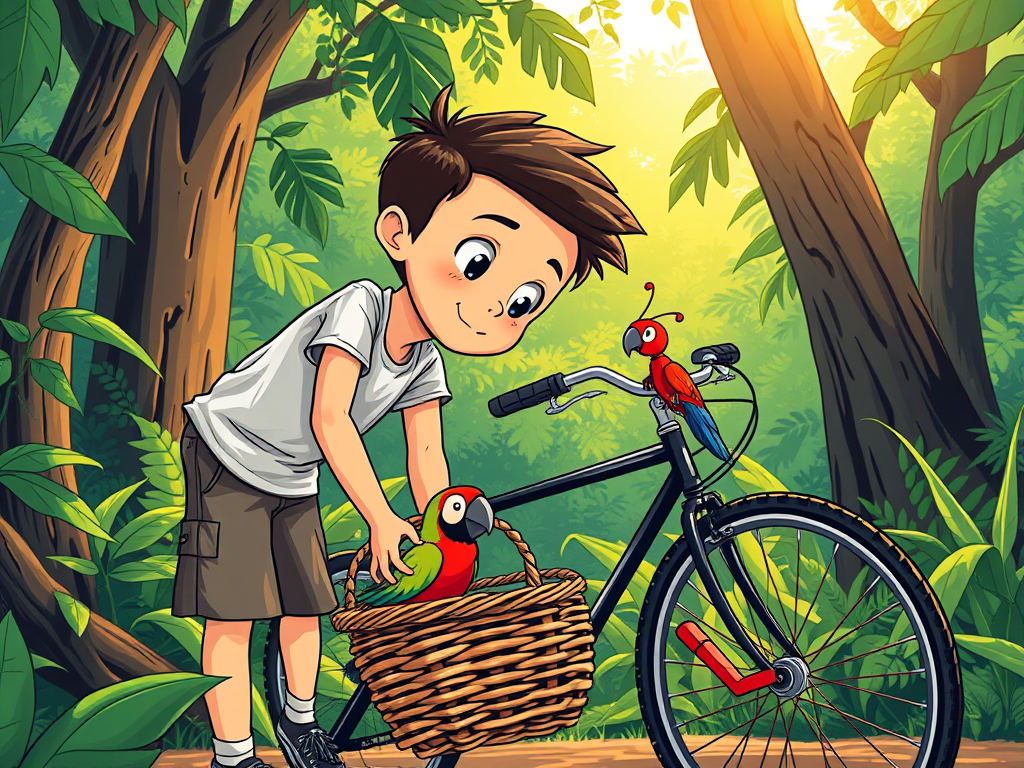
He put Daksh’s cage in the front basket of his bicycle.
“Let’s go!” he said, and started to pedal.

🚲🌲🌳 ⋯ ⋯ ⋯


🌿 The Forest Changes

At first, the road looked normal.
Dusty, with coconut trees on both sides.
Birds flew above. A small squirrel ran across.

But after some time, the houses disappeared.
The trees became taller. The road became quiet.

Mukshi looked around. “Where are we now?” he asked softly.

🏝️ 🚵 🐿️⋯ ⋯ ⋯


🗣️ The Parrot Speaks

Suddenly, he heard a voice. “Stop.”

Mukshi pressed the brakes. “Ahhh! Who said that?” he looked around.

“Here,” the voice said again.

Mukshi looked at Daksh.  
Daksh looked back at him.

“Was that… you?” Mukshi asked.
Daksh blinked. “Yes,” he said.

“Whaaaat? You can talk?”
“Yes,” Daksh said again, calmly.

“This is a special place. In this forest, some things are different.”

🦜😆👦 ⋯ ⋯ ⋯


🌱 A Tiny Thank You

Mukshi didn’t understand everything. But he was happy.

They kept riding slowly.

Soon, Daksh said, “Look. Over there.”

They saw a small ant.
She was stuck on a big leaf, turned upside down.

“She looks tired,” Daksh said.

Mukshi got down from his bicycle.
He bent down and gently helped the ant get off the leaf.

The ant walked away.
She didn’t talk, but she moved one tiny leg—like saying thank you.

🐜🐜🍂🍂 ⋯ ⋯ ⋯

“That’s it?” Mukshi asked.

“Yes,” Daksh said. “Helping once is sometimes enough.

🫶🫶 ⋯ ⋯ ⋯


🕊️ Quiet Heroes

They didn’t see any lions.
No kings.
No flying birds with crowns.

Just a small ant.
And a parrot who spoke.

That was more than enough.

😊😊😊 ⋯ ⋯ ⋯


At home, Amma asked, “So, what did you see?”

Mukshi smiled. “Just trees.”

He looked at Daksh.

Daksh blinked twice.
That meant:
“We’ll go again tomorrow.”

Daksh smiled, too. Even parrots like quiet heroes.

🏠😊🕊️🌿 ⋯ ⋯ ⋯


One Small Moment

Some days feel normal. But one small moment can become a story.
And one small story can become the beginning of something big.

This is my 1st Kids Story of Series named “Mukshi & Daksh: The Forest Road” – A gentle journey through an endless forest, where small encounters spark big lessons.


🧑🏽‍🏫 How I Teach, Guide, and Mentor—Wherever I Am, Even in Small Moments

These days, I’ve started to notice how I guide others—and why I do it differently than before.

It’s not something I planned.
It’s not something I learned in one place.
It came from years of seeing, learning, making mistakes, and slowly understanding:

“When someone trusts you to guide them—even for five minutes—it matters how you show up.”

Now, whether I’m reviewing work, answering a question, teaching something new, or correcting a mistake—
I do it differently than I used to.

I slow down.
I try to understand what they already know, where they’re stuck.
I don’t explain to show what I know.
I explain so they can move forward with more clarity and less doubt.

I don’t give everything at once.
Sometimes I wait.
Sometimes I just ask something back—to help them think through it themselves.

Because it’s not about giving answers.
It’s about helping them believe they can find the next one.
——

The label doesn’t matter.
It might be called mentoring at work.
It might be called parenting at home.
It might just be a one-time interaction with someone younger or unsure.

But for me, it’s all the same work:

“To help people learn—not just what to do,
but how to trust themselves more as they do it.”
——

I’ve also learned not to over-correct.
If something’s wrong, I say it directly—but with care.
Not because I want to soften the truth,
but because I’ve seen that how you speak often stays longer than what you said.

Even when someone doesn’t ask for guidance directly,
I try to notice.
If someone’s lost, quiet, or unsure—I just let them know I’m here.
That small check-in sometimes opens the door.
——

You don’t need to lead a team to do this.
You don’t need to call yourself a mentor.
If you’ve ever explained something to someone, or helped them understand better—
you’ve already started this work.

The question is: “how will you keep doing it?”
It’s not about time.
It’s about intention.
A small sentence. A moment of patience.
The right pause before correction.
The confidence you pass without saying much.
All that matters.
——

Still learning from every time I guide.
Still improving how I explain.
Still staying with it—one question, one step, one person at a time.

Still adding my digit.
—from me,
Lekshmana

🔹Side note:
My approach to guidance, characterised by calmness, clarity, and care, consistently applies across all interactions.
This includes both day-to-day moments and more focused guidance like skill development, career pathing, or navigating difficult choices.
The way I hold it doesn’t change.

🌱 Even Small Moments Carry Joy—If You Let Them

I don’t think joy announces itself.
It doesn’t come with music or milestones.
It comes in the middle of regular days—
if you stay close enough to notice.

It’s something I had to learn to see.
Not all at once—but slowly, over time.

For me, it shows up in many places:

When someone on my team gets recognized, and they look a little surprised but proud

When a friend calls just to ask, “Are you okay?”

When a small act of help actually reaches someone who needed it—not for thanks, just to know they felt supported

When my son says something wild, and I pause—not just to laugh, but to admire how he sees the world

When I sit in silence without guilt

When someone says, “Because of what you said that day, I tried again.”

These aren’t rewards.
They’re reminders.
That I’m still part of something—quietly, meaningfully.

That doesn’t mean joy is always sitting in front of me.

Some days I feel flat.
Some days I overthink.
Some days I keep doing, without feeling much.

But even on those days—joy isn’t gone.
It’s just quiet. Waiting. Somewhere under everything else.
And the more I stay close to what matters, the more often it returns.

Not as noise.
As presence.

Joy isn’t something I perform.
It’s something I protect.

I don’t chase it.
I notice it.
In little things I’m part of.
In small good that keeps moving through people.
In effort that feels real, even when no one sees it.

And over time, I’ve learned—this kind of joy doesn’t fade easily.
Because it’s not tied to big wins.
It’s built from small truths, lived fully.

That’s the kind I’m holding now.

Still learning.
Still living through it.
Still adding my digit.

– from me,
Lekshmana

🪨 The Three Words I’ve Been Carrying Since 17

There was no speech.
No ceremony.
Just three words, written in chalk on a school blackboard during my HSC days:

பணிவு · ஒழுக்கம் · முயற்சி
(Humility · Discipline · Hardwork)

They weren’t explained.
They were just there—every day.
And somehow, they stayed longer than any lesson.

At the time, I didn’t understand them as values.
I didn’t even think much about them.
But life has a quiet way of showing you what really matters—especially when things are unclear.

These words didn’t give me shortcuts.
They gave me something more reliable:
a direction.

Not a formula.
A foundation.


What they really mean—still:

பணிவு (Humility)
Keeps you teachable.
It clears space inside you to actually learn.
Without it, you defend your mistakes.
With it, you improve without ego.
Humility doesn’t lower you.
It holds you steady.

ஒழுக்கம் (Discipline)
Isn’t about control.
It’s about returning.
When you’re not motivated, when you’re tired, when nothing is urgent—
discipline is what still brings you to the right place.
Without asking why.

முயற்சி (Hardwork)
Isn’t loud.
It doesn’t always bring results quickly.
But it keeps you in motion.
Not just tasks—but care, patience, decisions you don’t want to make but still do.
It’s how you build things that last—even when no one’s clapping.


These aren’t just words.
They’ve become part of how I move, think, lead, parent, and write.
They shaped how I ask questions.
How I bounce back.
How I handle success quietly and mistakes without excuse.

I don’t follow them perfectly.
But I still try to follow them—consistently.


Why they still matter:

Because the world keeps changing.
New systems. New noise. New advice.
But when things go quiet again,
you still have to know how to live from the inside out.

These three words are enough for that.

They help you move forward when nothing feels clear.
They help you correct yourself without shame.
They help you build something real—without waiting to feel ready.

Not because someone is watching.
Not because it’ll make you stand out.
But because this is how good things are built—quietly, and one step at a time.

If nothing else stays,
these three will.

Still learning.
Still trying to follow.
Still adding my digit.
– from me,
Lekshmana

🙏🏽 A quiet thanks to my HSC teacher, Mr. Iyappan sir—
the one who wrote the words and mentored the version of me I’m still becoming.


🎒 சிறு வயதிலிருந்து என்னோட கூட வந்த மூன்று வார்த்தைகள்

HSC படிக்கும் காலம்.. class-
blackboard-ல
chalk-ஆ எழுதப்பட்டிருந்த
மூன்று வார்த்தைகள்:

பணிவு · ஒழுக்கம் · முயற்சி

அவை எதற்காகன்னு
அப்போ யாரும் விளக்கல.

ஆனா தினமும் கண்ணுக்கு படிச்சதால,
அந்த வார்த்தைகள்
மனசுல ஆழமா பதிஞ்சுடிச்சு.

அந்த வயசுல
இவை வாழ்க்கை மதிப்புகள்னு
எனக்கு புரியல.

அவ்வளவா கவனிக்கவும் இல்லை.
ஆனா வாழ்க்கை
மெல்ல மெல்ல
எது உண்மையா முக்கியம்னு
நமக்கு சொல்லிக்கொடுத்துக்கிட்டே போகுது.

இந்த மூன்று வார்த்தைகள்
shortcut எதையும் கொடுக்கல.
ஆனா
நான் எந்த வழி போகணும்னு
ஒரு தெளிவை கொடுத்தது.

கணக்கு இல்ல.
அடித்தளம்.

இன்றைக்கும் அவை என்ன சொல்லுது?

பணிவு

நம்மை கற்றுக்கொள்ளத் தயார் பண்ணும்.
தவறுகளை மறைக்காமல்
திருத்திக்கொள்ள உதவும்.
பணிவு நம்மை தாழ்த்தாது —
நம்மை நிலைநிறுத்தும்.

ஒழுக்கம்

கட்டுப்பாடு பற்றி மட்டும் இல்லை.
மனம் சோர்ந்த நாள்ல கூட
திரும்ப சரியான பாதைக்கு வருவது தான்.
யாரும் பார்க்காத நேரத்துல கூட
சரி என்று தெரிஞ்சதை
செய்ய வைக்கும் பழக்கம்.

முயற்சி

சத்தமில்லாமல் நடக்கும்.
உடனே பலன் தராம இருக்கலாம்.
ஆனா நம்மை நிறுத்தி விடாது.
விட மனசில்லாத முடிவுகளையும்
எடுத்து செல்லும் தைரியம் இதுதான்.
நீண்ட நாள் நிலைக்கும் விஷயங்கள்
அப்படித்தான் உருவாகும்.

இவை வெறும் வார்த்தைகள் இல்லை.
நான் யோசிக்கும் விதம்,
நடந்து கொள்வது,
பொறுப்பு ஏற்கும் விதம்,
ஒரு பெற்றோராக இருப்பது —
எல்லாத்திலும் கலந்து விட்டது.

எல்லா நாளும்
சரியாக பின்பற்றுகிறேன்னு சொல்ல முடியாது.
ஆனா
முயற்சி நிறுத்தல.

இன்னைக்கும் ஏன் அவை முக்கியம்?

உலகம் மாறிக்கிட்டே இருக்கு.
புது யோசனைகள்,
புது சத்தங்கள்.
ஆனா எல்லாம் அமைதியான பிறகு,
நம்ம உள்ளுக்குள்ள இருந்து
எப்படி வாழணும்னு
தெரிஞ்சிருக்கணும்.

அதுக்கு
இந்த மூன்று போதும்.

குழப்பத்துல கூட
முன்னேற உதவும்.
தவறுகளை அவமானம் இல்லாம
சரி செய்ய உதவும்.
தயார் இல்லாத நேரத்துல கூட
உண்மையான விஷயங்களை
கட்ட ஆரம்பிக்க உதவும்.

எவரும் பார்க்கிறார்களா என்பதற்காக இல்லை.
வேறுபட்டு தெரிஞ்சாகணும்னு இல்லை.
நல்ல விஷயங்கள்
அமைதியா,
ஒரு ஒரு படியா
அப்படித்தான் உருவாகும்.

எல்லாமே மாறினாலும்,
இந்த மூன்று
என்னோட கூட தான் இருக்கும்.

இன்னும் கற்றுக்கிட்டே இருக்கேன்.
இன்னும் முயற்சி பண்ணிக்கிட்டே இருக்கேன்.

— LP

🙏
அந்த நாள் blackboard-ல
இந்த வார்த்தைகளை எழுதி,
என்ன வாழ்க்கை பாதைக்கு வழி காட்ட ஆரம்பித்த
என் HSC ஆசிரியர்
ஐயப்பன் ஐயா அவர்களுக்கு
மனமார்ந்த நன்றி.

🌀 Like Pi, the Good Things Never End

π

There’s something quietly magical about Pi.

It never ends. It never repeats.
It keeps going, calmly, infinitely—digit by digit.

And somewhere along those endless decimals, there’s a lesson for us.

Because not every act has to be big to matter.
Like a tiny digit in Pi, what you do might feel small—too small to notice, too small to count.
But it builds.
And builds.
And eventually… becomes something.


– Teach your children what kindness looks like.
Not just how to succeed—but how to be honest, how to give, how to pause.

– Try to do something good today.
And if you can’t, at least don’t add to the harm.

– Respect people—not for what they do, but for who they are.

– Give a small part of your time to someone else.
Even a moment of care continues longer than we think.

These are only a few.
What you do may look different.
That’s still a digit.


“Start where you are.
Use what you know.
Do it quietly.”

That’s how the future is shaped.


None of these feel like breakthroughs.
But they are the decimals. They are the digits.
They are how change really works.

Not always with applause.
But always with impact.

Like Pi, progress grows when passed forward—digit by digit.
You don’t have to finish the sequence.
You just have to continue it—in your space, in your way.

How?

By staying aware.
By choosing the slightly better act.
By showing, quietly, what care looks like.

Future generations won’t just thank the big names in history.
They’ll live better because of the quiet people who moved forward without waiting for reward.

So if you’re wondering whether the small good things you do are worth it…
They are.

Especially when you keep going.


That’s it for now.
Just trying to add my digit.
– from me, Lekshmana

Who I am-

Some days, you show up as a mentor.
Some days, you question everything.
Some days, you lead.
Some days, you sit silently and reflect on the people who helped you rise.

The last few days, I’ve been thinking a lot about who I am—
Not in a resume format, but as a whole person.

I come from a village where I struggled to understand English.
Today, I mentor young engineers and help lead global-scale software delivery.
The journey? It’s been anything but straight.

My earliest confidence didn’t come from tech.
It came from math.
Solving problems gave me clarity before I had language for it.
That same mindset helped me later learn code, systems, and leadership.

I didn’t start with confidence. I earned it.
I didn’t know how to code. I learned by doing, breaking, and rebuilding.
I didn’t plan to lead a team. But I showed up every day, listened, failed, learned—and kept going.

Somewhere between code reviews and mentoring calls, I realized:
Leadership isn’t about having all the answers.
It’s about being available, being real, and being willing to evolve.

If you’re on a path that still feels unclear, trust me—
You’re not behind.

You’re just becoming.

Let’s keep growing. Together.
#PersonalGrowth #Leadership #EngineeringLife #Mentorship

Maven Dependency vs dependency management

dependencies

<dependencies>
<dependency>
<groupId>junit</groupId>
<artifactId>junit</artifactId>
</dependency>
</dependencies>

Dependency management

<dependencyManagement>
<dependencies>
<dependency>
<groupId>junit</groupId>
<artifactId>junit</artifactId>
<version>3.8</version>
</dependency>
</dependencies>
</dependencyManagement>

Dependency Management allows to consolidate and centralize the management of dependency versions without adding dependencies which are inherited by all children.

This is especially useful when you have a set of projects (i.e. more than one) that inherits a common parent.

In the parent POM, the main difference between the <dependencies> and <dependencyManagement> is this:

  • Artifacts specified in the <dependencies> section will ALWAYS be included as a dependency of the child module(s).
  • Artifacts specified in the <dependencyManagement> section, will only be included in the child module if they were also specified in the <dependencies> section of the child module itself.

    Why is it good?

  • because you specify the version and/or scope in the parent, and you can leave them out when specifying the dependencies in the child POM. This can help you use unified versions for dependencies for child modules, without specifying the version in each child module
  • <dependencyManagement> allows to easily upgrade/downgrade dependencies based on need, in other scenario this needs to be exercised at every child pom level

    Ref: https://stackoverflow.com/q/2619598

ஈரேழு பதினாலு லோகம் அர்த்தம்

ஈரேழு பதினாலு லோகம்
((இரு+ஏழு=பதினாலு+லோகம்))

இந்துமத வேத மரபின்படி இந்தப் பிரபஞ்சத்தில் பதினான்கு உலகங்கள் இருப்பதாக நம்பப்படுகிறது…ஈரேழு என்றால் இரண்டு ஏழு அதாவது பதினான்கு என்று அர்த்தம்…மேலுலகங்கள் ஏழு மற்றும் கீழுலகங்கள் ஏழு மொத்தம் பதினான்கு உலகங்கள் எனக் கணக்கு…நாம் வாழும் பூவுலகம் மேலுலகத்தில் உள்ளதாகும்…ஆகவே பூவுலகிற்கு மேல் ஆறு உலகங்களும், கீழே ஏழு உலகங்களும் இருக்கின்றன. அவைகள்;-

7. சத்யலோகம்
6. தபோலோகம்
5. ஜனோலோகம்
4. மஹர்லோகம்
3. சுவர்லோகம்
2. புவர்லோகம்

↑ மேல் உலகங்கள் ஏழு
______________________________________
1. பூலோகம் – நாம் வாழும் மண்ணுலகு
_____________________________________

↓கீழ் உலகங்கள் ஏழு

அதலலோகம்
விதலலோகம்
சுதலலோகம்
தலாதலலோகம்
மகாதலலோகம்
ரஸாதலலோகம்
பாதாளலோகம்


Refer: http://www.siththarkal.com/2013/12/blog-post_23.html


HTTP Status Codes & Description

This Gist code contains list of http

  • HTTP Status Codes
  • Description
  • Type Of Response
  • Reference URL

in JSON Format.


{
"http_codes":[
{
"code":100,
"status":"Continue",
"type":"Information responses",
"link":"https://developer.mozilla.org/en-US/docs/Web/HTTP/Status/100&quot;,
"description":"This interim response indicates that everything so far is OK and that the client should continue with the request or ignore it if it is already finished."
},
{
"code":101,
"status":"Switching Protocol",
"type":"Information responses",
"link":"https://developer.mozilla.org/en-US/docs/Web/HTTP/Status/101&quot;,
"description":"This code is sent in response to an Upgrade request header by the client, and indicates the protocol the server is switching too"
},
{
"code":103,
"status":"Processing ",
"type":"Information responses",
"link":"https://developer.mozilla.org/en-US/docs/Web/HTTP/Status/103&quot;,
"description":"This code indicates that the server has received and is processing the request, but no response is available yet."
},
{
"code":200,
"status":"OK",
"type":"Successful responses",
"link":"https://developer.mozilla.org/en-US/docs/Web/HTTP/Status/200&quot;,
"description":"The request has succeeded. The meaning of a success varies depending on the HTTP method: \n GET: The resource has been fetched and is transmitted in the message body.\n HEAD: The entity headers are in the message body. \n POST: The resource describing the result of the action is transmitted in the message body.\n TRACE: The message body contains the request message as received by the server"
},
{
"code":201,
"status":"Created",
"type":"Successful responses",
"link":"https://developer.mozilla.org/en-US/docs/Web/HTTP/Status/201&quot;,
"description":"The request has succeeded and a new resource has been created as a result of it. This is typically the response sent after a PUT request."
},
{
"code":202,
"status":"Accepted",
"type":"Successful responses",
"link":"https://developer.mozilla.org/en-US/docs/Web/HTTP/Status/202&quot;,
"description":"The request has been received but not yet acted upon. It is non-committal, meaning that there is no way in HTTP to later send an asynchronous response indicating the outcome of processing the request. It is intended for cases where another process or server handles the request, or for batch processing."
},
{
"code":203,
"status":"Non-Authoritative Information",
"type":"Successful responses",
"link":"https://developer.mozilla.org/en-US/docs/Web/HTTP/Status/203&quot;,
"description":"This response code means returned meta-information set is not exact set as available from the origin server, but collected from a local or a third party copy. Except this condition, 200 OK response should be preferred instead of this response"
},
{
"code":204,
"status":"No Content",
"type":"Successful responses",
"link":"https://developer.mozilla.org/en-US/docs/Web/HTTP/Status/204&quot;,
"description":"There is no content to send for this request, but the headers may be useful. The user-agent may update its cached headers for this resource with the new ones."
},
{
"code":205,
"status":" Reset Content",
"type":"Successful responses",
"link":"https://developer.mozilla.org/en-US/docs/Web/HTTP/Status/205&quot;,
"description":"This response code is sent after accomplishing request to tell user agent reset document view which sent this request."
},
{
"code":206,
"status":"Partial Content",
"type":"Successful responses",
"link":"https://developer.mozilla.org/en-US/docs/Web/HTTP/Status/206&quot;,
"description":"This response code is used because of range header sent by the client to separate download into multiple streams."
},
{
"code":207,
"status":"Multi-Status (WebDAV)",
"type":"Successful responses",
"link":"https://developer.mozilla.org/en-US/docs/Web/HTTP/Status/207&quot;,
"description":"A Multi-Status response conveys information about multiple resources in situations where multiple status codes might be appropriate."
},
{
"code":208,
"status":"Multi-Status (WebDAV)",
"type":"Successful responses",
"link":"https://developer.mozilla.org/en-US/docs/Web/HTTP/Status/208&quot;,
"description":"Used inside a DAV: propstat response element to avoid enumerating the internal members of multiple bindings to the same collection repeatedly."
},
{
"code":226,
"status":"226 IM Use",
"type":"Successful responses",
"link":"https://developer.mozilla.org/en-US/docs/Web/HTTP/Status/226&quot;,
"description":"The server has fulfilled a GET request for the resource, and the response is a representation of the result of one or more instance-manipulations applied to the current instance."
},
{
"code":300,
"status":"Multiple Choice",
"type":"Redirection messages",
"link":"https://developer.mozilla.org/en-US/docs/Web/HTTP/Status/300&quot;,
"description":"The request has more than one possible responses. User-agent or user should choose one of them. There is no standardized way to choose one of the responses."
},
{
"code":301,
"status":"Moved Permanently",
"type":"Redirection messages",
"link":"https://developer.mozilla.org/en-US/docs/Web/HTTP/Status/301&quot;,
"description":"This response code means that URI of requested resource has been changed. Probably, new URI would be given in the response."
},
{
"code":302,
"status":" Found",
"type":"Redirection messages",
"link":"https://developer.mozilla.org/en-US/docs/Web/HTTP/Status/302&quot;,
"description":"This response code means that URI of requested resource has been changed temporarily. New changes in the URI might be made in the future. Therefore, this same URI should be used by the client in future requests."
},
{
"code":303,
"status":"See Other",
"type":"Redirection messages",
"link":"https://developer.mozilla.org/en-US/docs/Web/HTTP/Status/303&quot;,
"description":"Server sent this response to directing client to get requested resource to another URI with an GET request."
},
{
"code":304,
"status":"Not Modified",
"type":"Redirection messages",
"link":"https://developer.mozilla.org/en-US/docs/Web/HTTP/Status/304&quot;,
"description":"This is used for caching purposes. It is telling to client that response has not been modified. So, client can continue to use same cached version of response."
},
{
"code":305,
"status":"Use Proxy",
"type":"Redirection messages",
"link":"https://developer.mozilla.org/en-US/docs/Web/HTTP/Status/305&quot;,
"description":"Was defined in a previous version of the HTTP specification to indicate that a requested response must be accessed by a proxy. It has been deprecated due to security concerns regarding in-band configuration of a proxy."
},
{
"code":306,
"status":"unused",
"type":"Redirection messages",
"link":"https://developer.mozilla.org/en-US/docs/Web/HTTP/Status/306&quot;,
"description":"This response code is no longer used, it is just reserved currently. It was used in a previous version of the HTTP 1.1 specification."
},
{
"code":307,
"status":"Temporary Redirect",
"type":"Redirection messages",
"link":"https://developer.mozilla.org/en-US/docs/Web/HTTP/Status/307&quot;,
"description":"Server sent this response to directing client to get requested resource to another URI with same method that used prior request. This has the same semantic than the 302 Found HTTP response code, with the exception that the user agent must not change the HTTP method used: if a POST was used in the first request, a POST must be used in the second request."
},
{
"code":308,
"status":"Permanent Redirect",
"type":"Redirection messages",
"link":"https://developer.mozilla.org/en-US/docs/Web/HTTP/Status/308&quot;,
"description":"This means that the resource is now permanently located at another URI, specified by the Location: HTTP Response header. This has the same semantics as the 301 Moved Permanently HTTP response code, with the exception that the user agent must not change the HTTP method used: if a POST was used in the first request, a POST must be used in the second request."
},
{
"code":400,
"status":"Bad Request",
"type":"Client error responses",
"link":"https://developer.mozilla.org/en-US/docs/Web/HTTP/Status/400&quot;,
"description":"This response means that server could not understand the request due to invalid syntax."
},
{
"code":401,
"status":"Unauthorized",
"type":"Client error responses",
"link":"https://developer.mozilla.org/en-US/docs/Web/HTTP/Status/401&quot;,
"description":"Authentication is needed to get requested response. This is similar to 403, but in this case, authentication is possible."
},
{
"code":402,
"status":"Payment Required",
"type":"Client error responses",
"link":"https://developer.mozilla.org/en-US/docs/Web/HTTP/Status/402&quot;,
"description":"This response code is reserved for future use. Initial aim for creating this code was using it for digital payment systems however this is not used currently."
},
{
"code":403,
"status":"Forbidden",
"type":"Client error responses",
"link":"https://developer.mozilla.org/en-US/docs/Web/HTTP/Status/403&quot;,
"description":"Client does not have access rights to the content so server is rejecting to give proper response."
},
{
"code":404,
"status":"Not Found",
"type":"Client error responses",
"link":"https://developer.mozilla.org/en-US/docs/Web/HTTP/Status/404&quot;,
"description":"Server can not find requested resource. This response code probably is most famous one due to its frequency to occur in web."
},
{
"code":405,
"status":"Method Not Allowed",
"type":"Client error responses",
"link":"https://developer.mozilla.org/en-US/docs/Web/HTTP/Status/405&quot;,
"description":"The request method is known by the server but has been disabled and cannot be used. The two mandatory methods, GET and HEAD, must never be disabled and should not return this error code."
},
{
"code":406,
"status":"Not Acceptable",
"type":"Client error responses",
"link":"https://developer.mozilla.org/en-US/docs/Web/HTTP/Status/406&quot;,
"description":"This response is sent when the web server, after performing server-driven content negotiation, doesn't find any content following the criteria given by the user agent."
},
{
"code":407,
"status":"Proxy Authentication Required",
"type":"Client error responses",
"link":"https://developer.mozilla.org/en-US/docs/Web/HTTP/Status/407&quot;,
"description":"This is similar to 401 but authentication is needed to be done by a proxy."
},
{
"code":408,
"status":"Request Timeout",
"type":"Client error responses",
"link":"https://developer.mozilla.org/en-US/docs/Web/HTTP/Status/408&quot;,
"description":"This response is sent on an idle connection by some servers, even without any previous request by the client. It means that the server would like to shut down this unused connection. This response is used much more since some browsers, like Chrome, Firefox 27+, or IE9, use HTTP pre-connection mechanisms to speed up surfing. Also note that some servers merely shut down the connection without sending this message."
},
{
"code":409,
"status":"Conflict",
"type":"Client error responses",
"link":"https://developer.mozilla.org/en-US/docs/Web/HTTP/Status/409&quot;,
"description":"This response would be sent when a request conflict with current state of server."
},
{
"code":410,
"status":"Gone",
"type":"Client error responses",
"link":"https://developer.mozilla.org/en-US/docs/Web/HTTP/Status/410&quot;,
"description":"This response would be sent when requested content has been deleted from server."
},
{
"code":411,
"status":"Length Required",
"type":"Client error responses",
"link":"https://developer.mozilla.org/en-US/docs/Web/HTTP/Status/411&quot;,
"description":"Server rejected the request because the Content-Length header field is not defined and the server requires it."
},
{
"code":412,
"status":"Precondition Failed",
"type":"Client error responses",
"link":"https://developer.mozilla.org/en-US/docs/Web/HTTP/Status/412&quot;,
"description":"The client has indicated preconditions in its headers which the server does not meet."
},
{
"code":413,
"status":"Payload Too Large",
"type":"Client error responses",
"link":"https://developer.mozilla.org/en-US/docs/Web/HTTP/Status/413&quot;,
"description":"Request entity is larger than limits defined by server; the server might close the connection or return an Retry-After header field."
},
{
"code":414,
"status":"URI Too Long",
"type":"Client error responses",
"link":"https://developer.mozilla.org/en-US/docs/Web/HTTP/Status/414&quot;,
"description":"The URI requested by the client is longer than the server is willing to interpret."
},
{
"code":415,
"status":"Unsupported Media Type",
"type":"Client error responses",
"link":"https://developer.mozilla.org/en-US/docs/Web/HTTP/Status/415&quot;,
"description":"The media format of the requested data is not supported by the server, so the server is rejecting the request."
},
{
"code":416,
"status":"Requested Range Not Satisfiable",
"type":"Client error responses",
"link":"https://developer.mozilla.org/en-US/docs/Web/HTTP/Status/416&quot;,
"description":"The range specified by the Range header field in the request can't be fulfilled; it's possible that the range is outside the size of the target URI's data."
},
{
"code":417,
"status":"Expectation Failed",
"type":"Client error responses",
"link":"https://developer.mozilla.org/en-US/docs/Web/HTTP/Status/417&quot;,
"description":"This response code means the expectation indicated by the Expect request header field can't be met by the server."
},
{
"code":418,
"status":"I'm a teapot",
"type":"Client error responses",
"link":"https://developer.mozilla.org/en-US/docs/Web/HTTP/Status/418&quot;,
"description":"The server refuses the attempt to brew coffee with a teapot."
},
{
"code":421,
"status":"Misdirected Request",
"type":"Client error responses",
"link":"https://developer.mozilla.org/en-US/docs/Web/HTTP/Status/421&quot;,
"description":"The request was directed at a server that is not able to produce a response. This can be sent by a server that is not configured to produce responses for the combination of scheme and authority that are included in the request URI."
},
{
"code":422,
"status":"Unprocessable Entity (WebDAV)",
"type":"Client error responses",
"link":"https://developer.mozilla.org/en-US/docs/Web/HTTP/Status/422&quot;,
"description":"The request was well-formed but was unable to be followed due to semantic errors."
},
{
"code":423,
"status":"Locked (WebDAV)",
"type":"Client error responses",
"link":"https://developer.mozilla.org/en-US/docs/Web/HTTP/Status/423&quot;,
"description":"The resource that is being accessed is locked."
},
{
"code":424,
"status":"Failed Dependency (WebDAV)",
"type":"Client error responses",
"link":"https://developer.mozilla.org/en-US/docs/Web/HTTP/Status/424&quot;,
"description":"The request failed due to failure of a previous request."
},
{
"code":426,
"status":"Upgrade Required",
"type":"Client error responses",
"link":"https://developer.mozilla.org/en-US/docs/Web/HTTP/Status/426&quot;,
"description":"The server refuses to perform the request using the current protocol but might be willing to do so after the client upgrades to a different protocol. The server sends an Upgrade header in a 426 response to indicate the required protocol(s)."
},
{
"code":428,
"status":"Precondition Required",
"type":"Client error responses",
"link":"https://developer.mozilla.org/en-US/docs/Web/HTTP/Status/428&quot;,
"description":"The origin server requires the request to be conditional. Intended to prevent the 'lost update' problem, where a client GETs a resource's state, modifies it, and PUTs it back to the server, when meanwhile a third party has modified the state on the server, leading to a conflict."
},
{
"code":429,
"status":"Too Many Requests",
"type":"Client error responses",
"link":"https://developer.mozilla.org/en-US/docs/Web/HTTP/Status/429&quot;,
"description":"The user has sent too many requests in a given amount of time (rate limiting)."
},
{
"code":431,
"status":"Request Header Fields Too Large",
"type":"Client error responses",
"link":"https://developer.mozilla.org/en-US/docs/Web/HTTP/Status/431&quot;,
"description":"The server is unwilling to process the request because its header fields are too large. The request MAY be resubmitted after reducing the size of the request header fields."
},
{
"code":451,
"status":"Unavailable For Legal Reasons",
"type":"Client error responses",
"link":"https://developer.mozilla.org/en-US/docs/Web/HTTP/Status/451&quot;,
"description":"The user requests an illegal resource, such as a web page censored by a government."
},
{
"code":500,
"status":"Internal Server Error",
"type":"Server error responses",
"link":"https://developer.mozilla.org/en-US/docs/Web/HTTP/Status/500&quot;,
"description":"The server has encountered a situation it doesn't know how to handle."
},
{
"code":501,
"status":"Not Implemented",
"type":"Server error responses",
"link":"https://developer.mozilla.org/en-US/docs/Web/HTTP/Status/501&quot;,
"description":"The request method is not supported by the server and cannot be handled. The only methods that servers are required to support (and therefore that must not return this code) are GET and HEAD."
},
{
"code":502,
"status":"Bad Gateway",
"type":"Server error responses",
"link":"https://developer.mozilla.org/en-US/docs/Web/HTTP/Status/502&quot;,
"description":"This error response means that the server, while working as a gateway to get a response needed to handle the request, got an invalid response."
},
{
"code":503,
"status":"Service Unavailable",
"type":"Server error responses",
"link":"https://developer.mozilla.org/en-US/docs/Web/HTTP/Status/503&quot;,
"description":"The server is not ready to handle the request. Common causes are a server that is down for maintenance or that is overloaded. Note that together with this response, a user-friendly page explaining the problem should be sent. This responses should be used for temporary conditions and the Retry-After: HTTP header should, if possible, contain the estimated time before the recovery of the service. The webmaster must also take care about the caching-related headers that are sent along with this response, as these temporary condition responses should usually not be cached."
},
{
"code":504,
"status":"Gateway Timeout",
"type":"Server error responses",
"link":"https://developer.mozilla.org/en-US/docs/Web/HTTP/Status/504&quot;,
"description":"This error response is given when the server is acting as a gateway and cannot get a response in time."
},
{
"code":505,
"status":"HTTP Version Not Supported",
"type":"Server error responses",
"link":"https://developer.mozilla.org/en-US/docs/Web/HTTP/Status/505&quot;,
"description":"The HTTP version used in the request is not supported by the server."
},
{
"code":506,
"status":"Variant Also Negotiates",
"type":"Server error responses",
"link":"https://developer.mozilla.org/en-US/docs/Web/HTTP/Status/506&quot;,
"description":"The server has an internal configuration error: transparent content negotiation for the request results in a circular reference."
},
{
"code":507,
"status":"Insufficient Storage",
"type":"Server error responses",
"link":"https://developer.mozilla.org/en-US/docs/Web/HTTP/Status/507&quot;,
"description":"The server has an internal configuration error: the chosen variant resource is configured to engage in transparent content negotiation itself, and is therefore not a proper end point in the negotiation process."
},
{
"code":508,
"status":"Loop Detected (WebDAV)",
"type":"Server error responses",
"link":"https://developer.mozilla.org/en-US/docs/Web/HTTP/Status/508&quot;,
"description":"The server detected an infinite loop while processing the request."
},
{
"code":510,
"status":"Not Extended",
"type":"Server error responses",
"link":"https://developer.mozilla.org/en-US/docs/Web/HTTP/Status/510&quot;,
"description":"Further extensions to the request are required for the server to fulfill it."
},
{
"code":511,
"status":"Network Authentication Required",
"type":"Server error responses",
"link":"https://developer.mozilla.org/en-US/docs/Web/HTTP/Status/511&quot;,
"description":"The 511 status code indicates that the client needs to authenticate to gain network access."
}
]
}

Reference Url, Type Of Response

Ref:

https://developer.mozilla.org/en-US/docs/Web/HTTP/Status

https://tools.ietf.org/html/rfc7231)

Aazhi Mazhai Kanna -ஆழி மழை கண்ணா

Read in English http://godharangan.blogspot.in/2010/12/day-4-aazhi-mazhai-kanna.html

இந்தியா ஒரு புண்ணியபூமி .., தெய்வீக பூமி… கர்மபூமி … என்று உலக மக்களால் போற்றப்படும் நாடு இந்தியநாடு ….

சித்தர்களும், முனிவர்களும், ரிஷிகளும் , முனிகளும் வாழ்ந்த பூமி அண்ட சராசரங்களையும் அறிவியலே இல்லாத காலங்களில் .. அத்மஞ்சனங்களின் மூலம் எடுத்துச்சொன்னவர்கள் … நம் முனோர்கள் …வாழும் முறை, வாழ்வதற்க்கான வழி முறைகள் , வாழ்க்கை தத்துவம் , மருத்துவம், வானசாஸ்திரம் , கணிதம் , பொருளாதாரம் போன்ற எல்லா துறைகளிலும் வல்லவர்கள் … இந்தியர்கள் .,
5000 வருடங்களுக்கு முன்னரே … மழை எப்படி பொழிகிறது என்று , ஆண்டாள் , கோதை நாச்சியார் திருப்பாவையில் சொல்லி இருக்கிறார்

ஆழி மழைக்கண்ணா ஒன்றுநீ கைகரவேல்
ஆழிஉள் புக்கு முகந்துகொடு ஆர்த்துஏறி
ஊழி முதல்வன் உருவம்போல் மெய்கறுத்துப்
பாழியம் தோளுடைப் பற்பனாபன் கையில்
ஆழி போல்மின்னி வலம்புரி போல் நின்று அதிர்ந்து
தாழாதே சார்ங்க முதைத்த சரமழைபோல்
வாழ உலகினில் பெய்திடாய் நாங்களும்
மார்கழி நீராட மகிழ்ந்தேலோர் எம்பாவாய்.

விளக்கவுரை

மூன்றாம் பாசுரத்தில் நோன்பு நோற்பதால் கிடைக்கும் பலனைச் சொன்னார் ஆண்டாள். மும்மாரி பெய்து பசுக்கள் பாலால் இல்லம் நிறைத்து செல்வம் பெருகும் என்றவர், இந்தப் பாசுரத்தில் தாம் சொன்ன சுபிட்சத்துக்காக கண்ணனே கருணை மழையாகப் பொழிய வேண்டும் என்று வேண்டுகிறார்.
மழை மண்டலத்துக்குத் தலைவனாக விளங்கும் கண்ணனே! உன் கொடையில் எதையும் நீ ஒளிக்காமல் அருள வேண்டும். நீ செய்ய வேண்டிய பணி ஒன்றும் உண்டு. அது, நீ கடலினுள் புகுந்து, அங்கிருந்து நீரினை முகந்து கொண்டு பேரொலி எழுப்பி கர்ஜனை செய்து, ஆகாயத்தின் மேல் ஏறி, ஊழி காலம் முதலான அனைத்துக்கும் காரணனாக விளங்கும் எம்பெருமானின் திருமேனியைப் போலே கறுத்து, பெருமை பொருந்திய சுந்தரத் தோளுடையானும், நாபியிலே கமல மலர் கொண்டு திகழும் பெருமானின் வலக்கையிலே திகழும் சக்கரத்தாழ்வானாகிய திருவாழியைப் போலே ஒளிர்ந்து, இடது கரத்தில் திகழும் பாஞ்சஜன்யப் பெரும் சங்கினைப் போலே நிலை நின்று முழக்கி, உன் சார்ங்கம் ஆகிற வில்லில் இருந்து விரைந்து புறப்படும் அம்புகளைப் போலே, இந்த உலகத்தார் அனைவரும் வாழும்படியாகவும், கண்ணன் எம்மானுடன் கலந்து மகிழ நோன்பு நோற்கும் நாங்களும் உளம் மகிழ மார்கழி நீராட்டம் செய்யும்படி, தாமதம் ஏதுமின்றி மழை பொழிய வைத்திடுவாய்…- என்று கண்ணனை வேண்டுகிறார் ஆண்டாள். மழை எப்படிப் பொழிகிறது என்ற அறிவியல் நுட்பத்தைத் தம் பாசுரத்தில் புகுத்தி, அதற்குக் காரணன் கண்ணனே என்று கூறி, அனைவரும் அவனைப் பிரார்த்தனை செய்யப் பணிக்கிறார் ஸ்ரீஆண்டாள் நாச்சியார்!

Src:
http://godharangan.blogspot.in/…/day-4-aazhi-mazhai-kanna.h…