🔹 Building in a Way That Lasts Without You

Building strong, together. This is how we make things last.

Some people say, “Be so good they can’t ignore you.
That’s fine. But some of us live by something else:

“Be so open, they don’t need to depend only on you.”

I don’t want to be the only one who holds the answer.
I want to be part of something that runs well—even when I’m not around.

Sometimes that means writing one extra note in the code.
Sometimes it means letting someone else handle a tough call, even if I could do it faster.
This approach often means trading immediate speed for long-term resilience.
It’s a conscious decision, especially in critical moments, to grow others—even if it adds a little time.

Sometimes, it’s just quietly teaching the same thing again—and again—until someone else gets it.

That’s not stepping back. That’s building forward.
It doesn’t mean avoiding responsibility—it means sharing it in a way that others grow.

This kind of “building” isn’t about being hands-off.
It actually takes more effort—writing things clearly, creating good systems, coaching people patiently.

And no, it’s not always perfect.
There are days I forget to document.
There are moments I want to just finish it myself—because it’s easier.

But I remind myself:
If only I can do it, I haven’t really built it yet.

🌱 What I try to do:

  • Share context, not just tasks.
  • Teach slowly, even when I’m in a rush.
  • Write things others can pick up.
  • Step away without everything falling.
  • Support those stepping up with room to learn.

It also means creating space where others can point out what’s breaking, or what needs rethinking—even if I was the one who started it.

This applies outside work too.
At home, I try to involve others.
Let someone else lead.
Let kids learn by trying.
Let systems breathe without me at the center.

It’s not about disappearing.
It’s about making sure nothing disappears because of me.

This isn’t about being humble for praise.
It’s about keeping what we build alive—through others.

🧭 Like Pi, good systems don’t need every digit to be perfect.
They just need enough people who care to continue it.
One digit joins. Another follows.

That’s how it grows.


Build something that continues—even if your name isn’t mentioned.
Teach someone in a way that they forget you were the one who taught it.
If it grows through others, it means you did it right.
That’s the kind of legacy I care about.

– from me,
Lekshmana

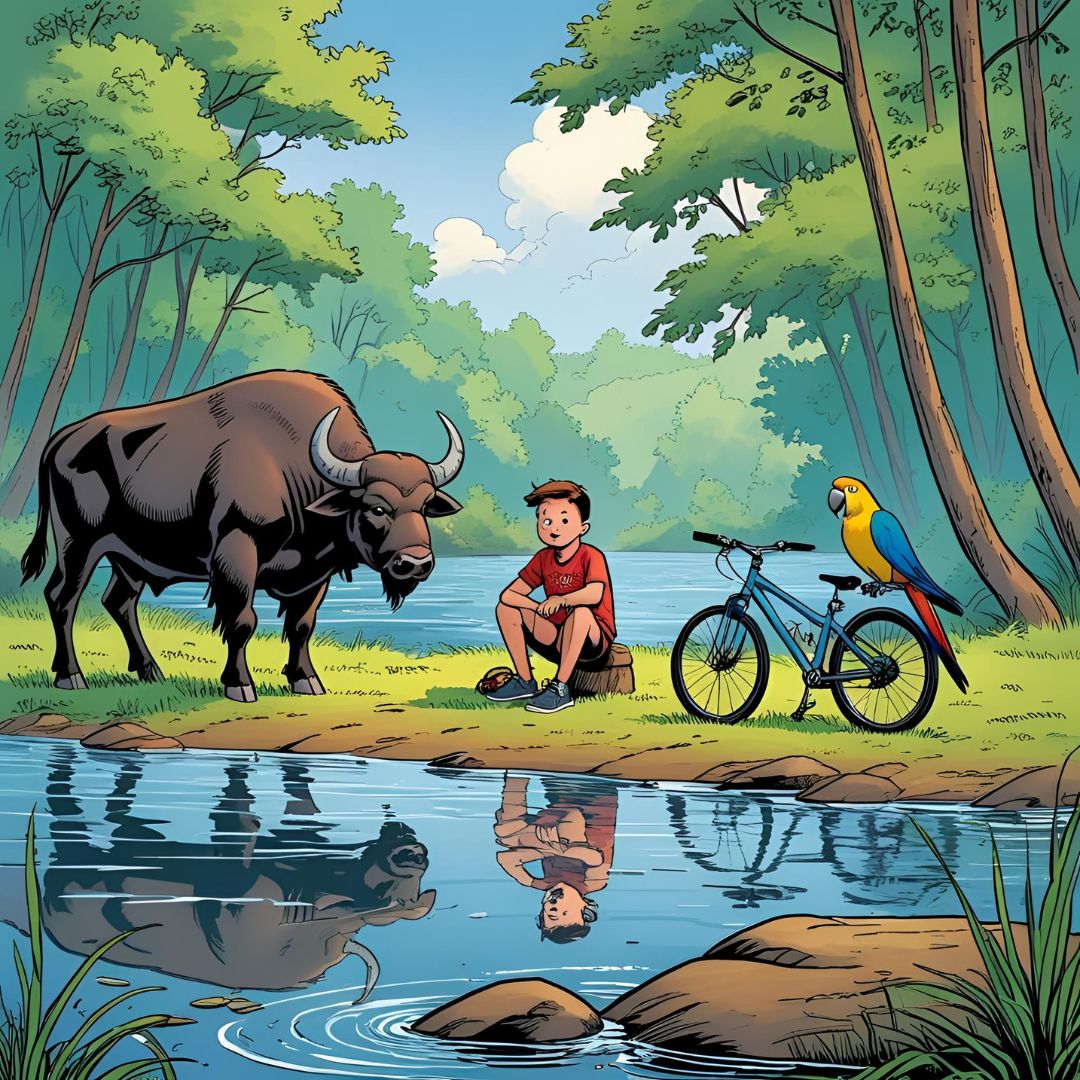
📖 Story 5: Mukshi and the Buffalo by the River

Mukshi and the Buffalo by the River

🌅 A Morning with Questions

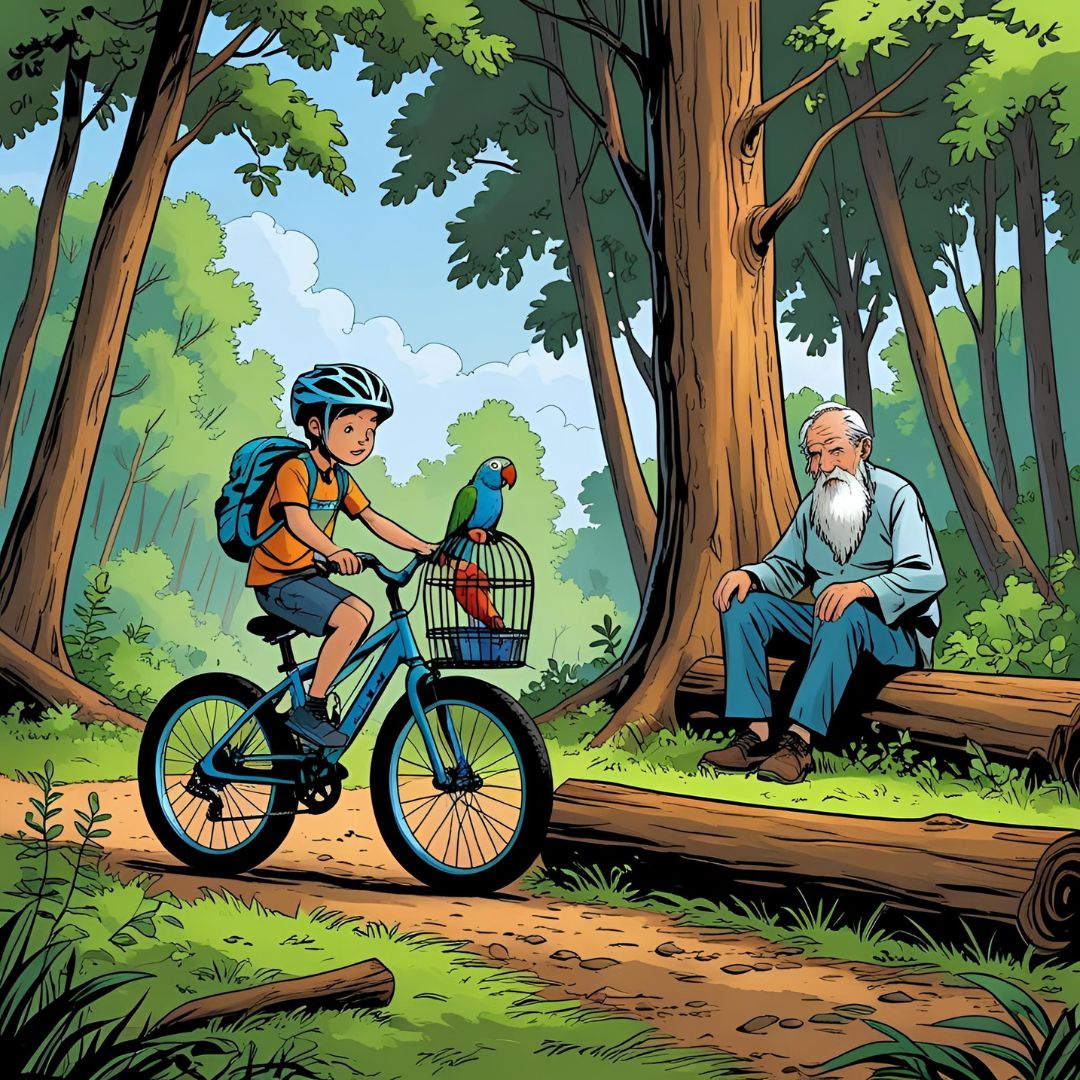
Mukshi and Daksh rode along the forest path.
The sun was slow. The road was quiet.

“I wonder if we’ll find anything today,” Mukshi said.
Daksh blinked once. That meant: “Let’s see.”

🌊 A New Stop

They heard the sound of water.
“A river!” Mukshi smiled.

They followed the sound and reached the edge.
The river was gentle, wide, and full of tiny ripples.

Near the water, stood an old buffalo.
It wasn’t moving. Just watching the river.

Mukshi walked closer. “Are you okay?” he asked.
No answer.
“Do you need help?” he asked again.

The buffalo blinked slowly. “I’m just listening to the river,” it said.
Mukshi was surprised. “Listening? To what?”

“To the stories,” the buffalo said.
“This river carries voices. From the hills, the trees, the clouds.”

🌾 A New Kind of Help

Mukshi sat down beside the buffalo.
He listened too.

The river made soft sounds.
Like humming. Like whispering. Like breathing.

He didn’t speak. He just stayed.

After some time, the buffalo said, “Thank you for sitting. Most don’t.”

Mukshi smiled. “I thought I had to do something.”
“You did,” the buffalo said. “You waited. You listened.”

🕊️ The Ride Back

As they rode back, Mukshi didn’t talk much.
He looked at the trees. The sky. The breeze.

Daksh blinked twice.
That meant: “We heard something today. Even without words.”

Sometimes, we rush to help.
Sometimes, we speak too soon.
But the wisest ones often teach without asking.
Just by being there.

Sit. Wait. Listen.
That’s also a way to grow.

📖 Story 4: Mukshi and the Fruit That Was Shared

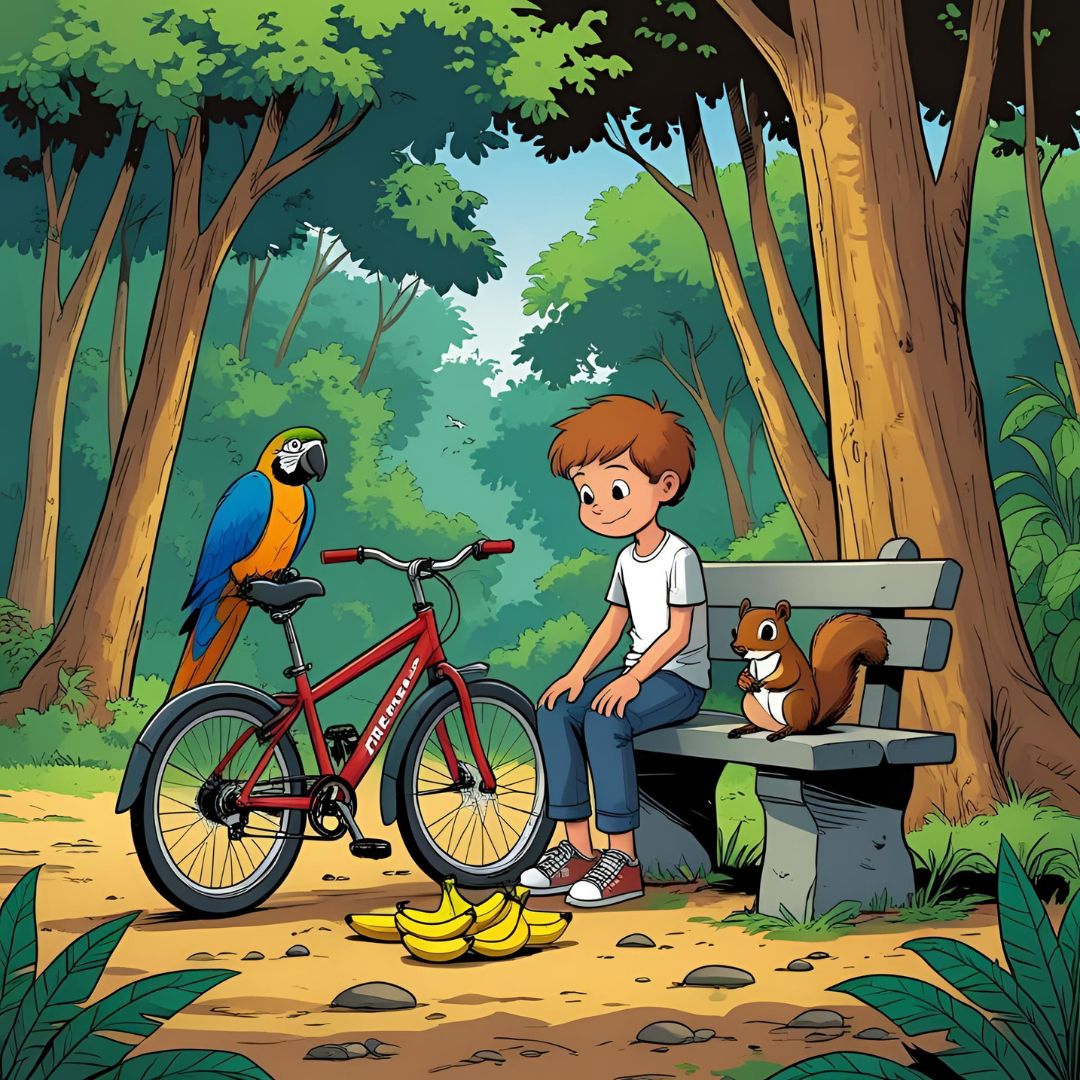
Mukshi and the Fruit That Was Shared with Squirrel

🌟 It was a calm morning.
Mukshi woke up and smiled.

Today is Amma and Appa’s wedding day,” he whispered to Daksh.
Daksh blinked twice. That meant: “Let’s do something.”

🥜 A Thoughtful Ride

Mukshi packed a small box with a few bananas
“One for you,” he told Daksh,
“And the others for someone we meet.”

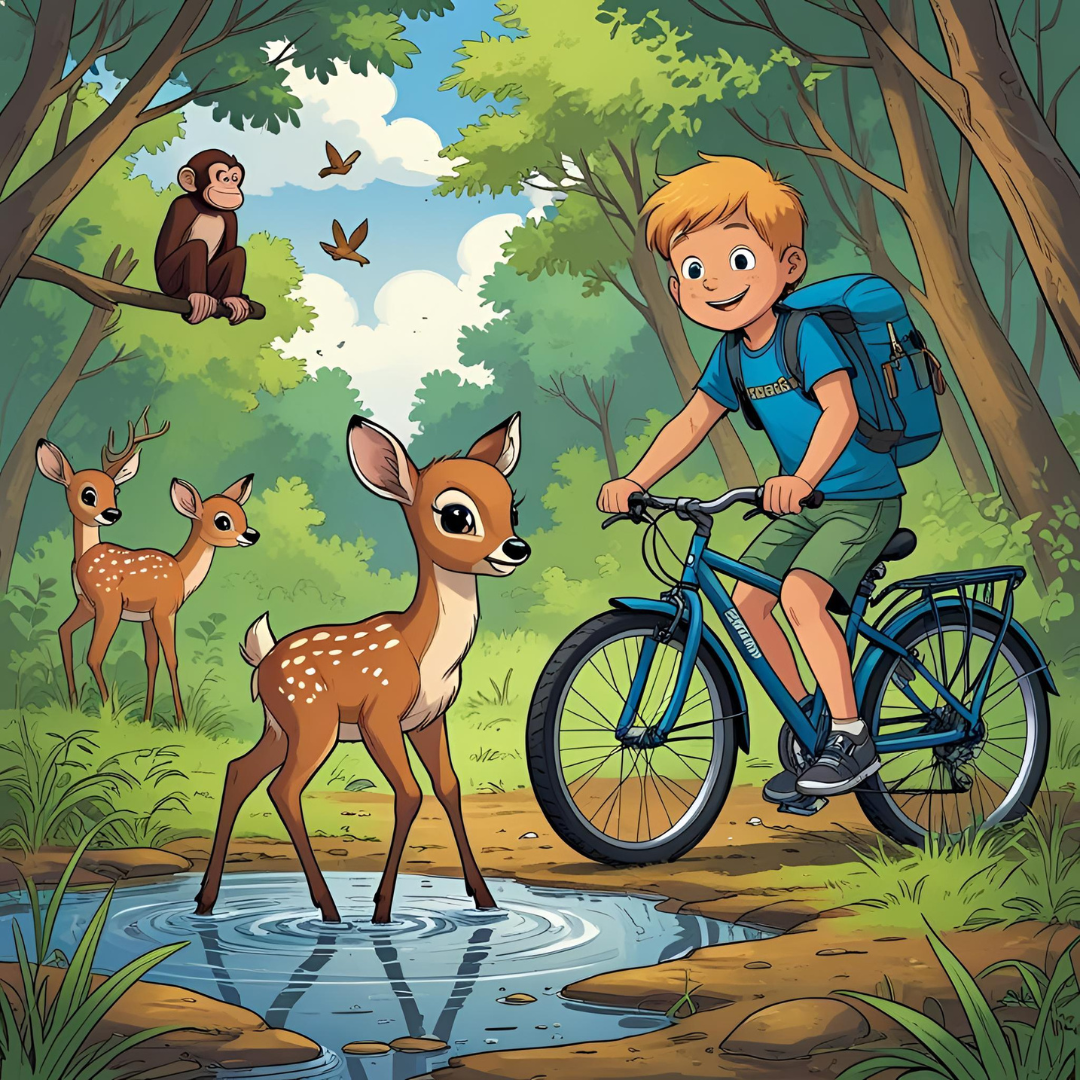
They rode slowly through the soft forest road.
The trees looked bright. The air smelled like tamarind leaves.

🌱 A New Friend

Near a stone bench, they saw a small squirrel sitting quietly.
It looked tired.
Its tail was dusty. Its eyes half-closed.

Mukshi stopped.
He looked at Daksh.
Daksh didn’t speak.

Mukshi placed the banana near the squirrel and stepped back.
The squirrel smelled it. Then slowly began to eat.

Daksh blinked once. That meant: “Good.”

🧐 A Quiet Smile

They didn’t wait.
They just rode ahead, quietly.

At home, Amma asked, “Did you go somewhere today?”
Mukshi smiled. “Yes. Just shared.”

😊 Daksh blinked again. Even parrots know—
sharing small things can make a day feel big.

Some days are called celebrations.
Some days are just regular.
But on any day, we can share what we have—
with someone who might need it more.

You don’t have to stop the party.
Just remember to carry kindness with you, too.

🪷 Education doesn’t just shape careers. It shapes roots.

Where I come from,
education didn’t arrive with celebration.

It arrived through effort.
Through quiet pushes.
Through families doing their best with what they had.

We didn’t talk about “success.”
We just hoped things wouldn’t stay the same.

Sometimes, the whole family quietly adjusts their life,
so one person can keep studying.

It wasn’t always fair.
But it was real.

And for many of us—it worked.

Because education, when held with care and values,
doesn’t just help one person rise.
It lifts a whole family.
It lights the path for future generations.
It lets you speak with confidence,
choose with clarity,
and one day—guide someone else.

It’s not just for getting a job.
It’s how I learned to think.
To lead.
To help.

That’s why I still remember the blackboard in my HSC school.
It didn’t say “achieve more” or “be first.”
It said:

பணிவு. ஒழுக்கம். முயற்சி.
Humility. Discipline. Hard work.

Those three still guide me more than any certificate I’ve earned.

Yes, money can be a barrier.
But I’ve seen families and students fight through it.
With support. With effort. With belief.

If you’re studying now—keep going.
If you’re guiding someone else—keep showing up.
If you’ve ever made space for someone to learn—thank you.

Because education doesn’t end with one person.
It grows outward—quietly, like roots.
And it carries forward—quietly, like a pattern.
Like the digits of Pi—it continues, one to the next, without needing applause—only continuity.

Until a house, a street, or a village starts to feel different.

That’s it for now.
Just trying to add my digit.
from a quiet classroom where roots started growing.

🔸 Reminder:
If you’ve studied with intention, supported someone, or still believe in learning—
you’ve already added to something bigger.

Education—paired with the right values—doesn’t just change a life.
It strengthens a generation.Let’s keep building that.
Quietly. Clearly. Together.

📖 Story 3: Mukshi and the Quiet Little Plant

🌱 It was a sunny morning.
Mukshi cleaned his bicycle and packed his bottle.
Daksh blinked twice. That meant: “Let’s go.”

As they rode past the small shops and the temple bell,
the trees got taller, and the road became soft and silent.

🚲☀️🌳⋯ ⋯ ⋯

Mukshi and the Quiet Little Plant

🌿 A Tiny Surprise

Just before a bend, Mukshi saw something green.
A small plant was growing right between two stones.
It was tiny and few leaves.

Mukshi stopped and stared.
He gently touched one leaf.
It bent and bounced back.

“It’s strong,” he said.
Daksh sat quietly.

🌿 The Thought

Mukshi picked up a stick nearby.
For a second, he thought: “Shall I poke the plant?”

Just then, Daksh said,
“Why hurt something that hasn’t done anything?”

Mukshi looked again.
The plant stood there—quiet. No sound. No cry.
But still trying to grow.

🌿 A Little Act

He dropped the stick.
Then used his foot to gently push some soil around the plant.

“It didn’t ask for help,” he said.
“But maybe it needed it.”

Daksh blinked.
“That’s what caring looks like. You notice. You help. Even when no one claps.”

🌿 The Way Back

On the way home, Mukshi didn’t talk much.
He kept thinking about that plant.

At home, Amma asked, “Did you feed any birds today?”
Mukshi said, “No. But I fed the soil.”

Some things don’t speak. But they still grow.

📖 Story 2: Mukshi and the Big Yellow Leaf

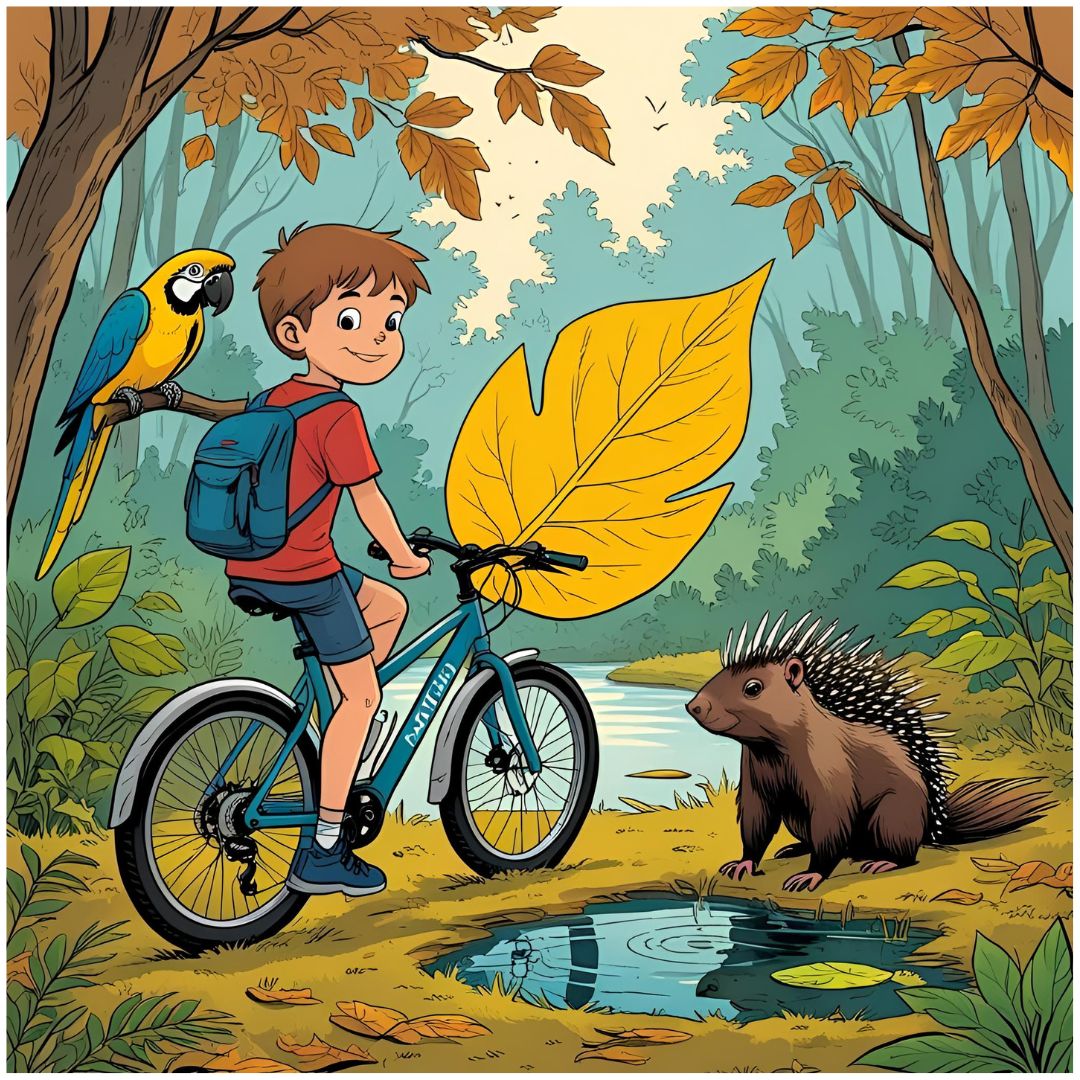
“Mukshi, Daksh, and a special leaf.”

🌅 A cool breeze came early that morning.
In the village, banana leaves moved gently.
A cow sneezed. A dog barked once, then slept again.

Mukshi smiled.
“It’s a good day.”
Daksh, the green parrot, blinked.
That meant, “Let’s go.”

They packed a small snack—
some rice balls Amma made,
and water in an old pickle bottle.
Then off they went.

🚲🌿🏡⋯ ⋯ ⋯

🌳 The Forest Path

The forest was full of dry leaves.
Big ones. Tiny ones.
Some shaped like stars. Others like hearts.

Mukshi picked up a large, bright yellow leaf.
“Wow! This is mine,” he said.
He put it in his cycle basket.

Daksh watched quietly.

🦔 A Little Friend

Near a small pond,
they saw someone sniffing around.

It was a baby porcupine named Muru.

“Hi Muru! What are you looking for?”
“My leaf,” Muru said sadly.
“It flew away. I nap on it every day.”

Mukshi peeked into his basket.
His yellow leaf. Could it be Muru’s?

🧠 A Small Choice

Mukshi looked at Muru.
Then at the leaf.
Then at his hands.

He took the leaf out.
And gave it to Muru.

Muru squeaked happily.
He curled up on it like a blanket.

Daksh said,
“You gave something small—
but it meant a lot.”

🏡 The Way Back

On the way home, Mukshi saw another leaf.
Red, with tiny holes.
He looked around.
“Anyone need this one?”

The wind was quiet. He picked it up gently.

At the gate, Amma asked,
“Find anything nice today?”

Mukshi smiled.
“Yes. But I gave it to someone else.”

Daksh blinked twice.
That meant: Good job.

Some things we find… aren’t ours to keep.

Check All our past stories here

Story 1 – The Day Daksh Spoke 👦🚲🦜

Featured

From “Mukshi & Daksh: The Forest Road” Series

For a while now, I’ve been wanting to write stories for children—simple stories that are not only fun, but quietly carry lessons about kindness, honesty, and trusting yourself.

This is the beginning of that journey

🌿 “Mukshi & Daksh: The Forest Road” is a slow-growing series where a boy and his parrot wander through a long, never-ending forest road—meeting new friends, noticing small things, and learning gently along the way.

It’s not polished or perfect—but it’s me, and it’s honest.

This is the very first story in the series:

📖 The Day Daksh Spoke

🌅 The Ride Begins

One morning, 👦 Mukshi woke up early.
The sun had not come out yet. The sky was still dark and quiet.

He looked at the small green cage near the window.
Inside sat his parrot—Daksh.

Mukshi smiled.
“Shall we go for a ride today?” he asked.

🦜Daksh blinked twice.
That meant “yes.”  

👦☀️🏠🦜⋯ ⋯ ⋯


Amma gave Mukshi two idlis, one banana, and a small bottle of water.
“Don’t go too far,” she said, tying his shoelaces.

“Just near the big trees,” Mukshi said.
But in his heart, he wanted to ride a little more.

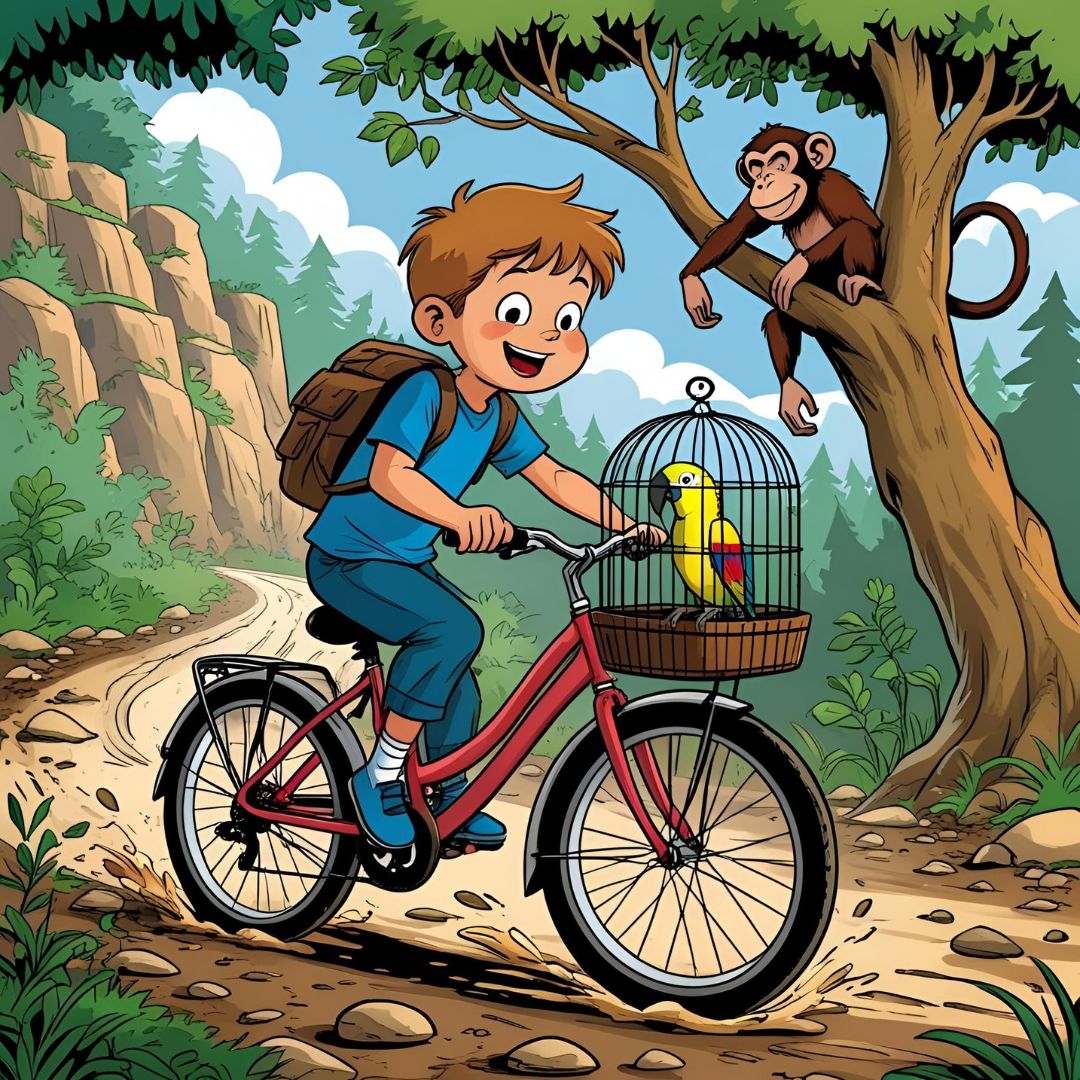
He put Daksh’s cage in the front basket of his bicycle.
“Let’s go!” he said, and started to pedal.

🚲🌲🌳 ⋯ ⋯ ⋯


🌿 The Forest Changes

At first, the road looked normal.
Dusty, with coconut trees on both sides.
Birds flew above. A small squirrel ran across.

But after some time, the houses disappeared.
The trees became taller. The road became quiet.

Mukshi looked around. “Where are we now?” he asked softly.

🏝️ 🚵 🐿️⋯ ⋯ ⋯


🗣️ The Parrot Speaks

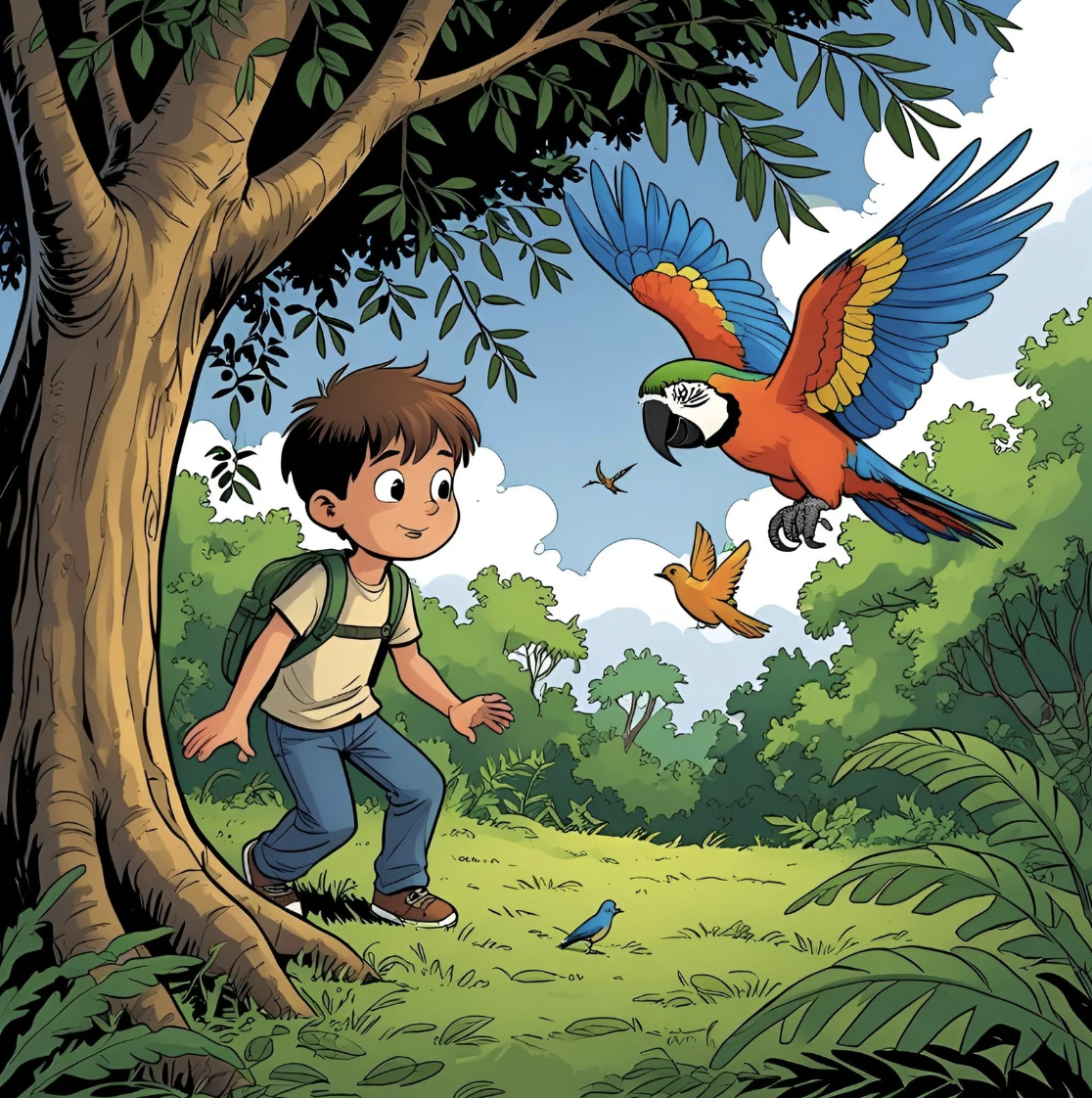
Suddenly, he heard a voice. “Stop.”

Mukshi pressed the brakes. “Ahhh! Who said that?” he looked around.

“Here,” the voice said again.

Mukshi looked at Daksh.  
Daksh looked back at him.

“Was that… you?” Mukshi asked.
Daksh blinked. “Yes,” he said.

“Whaaaat? You can talk?”
“Yes,” Daksh said again, calmly.

“This is a special place. In this forest, some things are different.”

🦜😆👦 ⋯ ⋯ ⋯


🌱 A Tiny Thank You

Mukshi didn’t understand everything. But he was happy.

They kept riding slowly.

Soon, Daksh said, “Look. Over there.”

They saw a small ant.
She was stuck on a big leaf, turned upside down.

“She looks tired,” Daksh said.

Mukshi got down from his bicycle.
He bent down and gently helped the ant get off the leaf.

The ant walked away.
She didn’t talk, but she moved one tiny leg—like saying thank you.

🐜🐜🍂🍂 ⋯ ⋯ ⋯


“That’s it?” Mukshi asked.

“Yes,” Daksh said. “Helping once is sometimes enough.

🫶🫶 ⋯ ⋯ ⋯


🕊️ Quiet Heroes

They didn’t see any lions.
No kings.
No flying birds with crowns.

Just a small ant.
And a parrot who spoke.

That was more than enough.

😊😊😊 ⋯ ⋯ ⋯


At home, Amma asked, “So, what did you see?”

Mukshi smiled. “Just trees.”

He looked at Daksh.

Daksh blinked twice.
That meant:
“We’ll go again tomorrow.”

Daksh smiled, too. Even parrots like quiet heroes.

🏠😊🕊️🌿 ⋯ ⋯ ⋯


One Small Moment

Some days feel normal. But one small moment can become a story.
And one small story can become the beginning of something big.

This is my 1st Kids Story of Series named “Mukshi & Daksh: The Forest Road” – A gentle journey through an endless forest, where small encounters spark big lessons.


🧑🏽‍🏫 How I Teach, Guide, and Mentor—Wherever I Am, Even in Small Moments

These days, I’ve started to notice how I guide others—and why I do it differently than before.

It’s not something I planned.
It’s not something I learned in one place.
It came from years of seeing, learning, making mistakes, and slowly understanding:

“When someone trusts you to guide them—even for five minutes—it matters how you show up.”

Now, whether I’m reviewing work, answering a question, teaching something new, or correcting a mistake—
I do it differently than I used to.

I slow down.
I try to understand what they already know, where they’re stuck.
I don’t explain to show what I know.
I explain so they can move forward with more clarity and less doubt.

I don’t give everything at once.
Sometimes I wait.
Sometimes I just ask something back—to help them think through it themselves.

Because it’s not about giving answers.
It’s about helping them believe they can find the next one.
——

The label doesn’t matter.
It might be called mentoring at work.
It might be called parenting at home.
It might just be a one-time interaction with someone younger or unsure.

But for me, it’s all the same work:

“To help people learn—not just what to do,
but how to trust themselves more as they do it.”
——

I’ve also learned not to over-correct.
If something’s wrong, I say it directly—but with care.
Not because I want to soften the truth,
but because I’ve seen that how you speak often stays longer than what you said.

Even when someone doesn’t ask for guidance directly,
I try to notice.
If someone’s lost, quiet, or unsure—I just let them know I’m here.
That small check-in sometimes opens the door.
——

You don’t need to lead a team to do this.
You don’t need to call yourself a mentor.
If you’ve ever explained something to someone, or helped them understand better—
you’ve already started this work.

The question is: “how will you keep doing it?”
It’s not about time.
It’s about intention.
A small sentence. A moment of patience.
The right pause before correction.
The confidence you pass without saying much.
All that matters.
——

Still learning from every time I guide.
Still improving how I explain.
Still staying with it—one question, one step, one person at a time.

Still adding my digit.
—from me,
Lekshmana

🔹Side note:
My approach to guidance, characterised by calmness, clarity, and care, consistently applies across all interactions.
This includes both day-to-day moments and more focused guidance like skill development, career pathing, or navigating difficult choices.
The way I hold it doesn’t change.

🌱 Even Small Moments Carry Joy—If You Let Them

I don’t think joy announces itself.
It doesn’t come with music or milestones.
It comes in the middle of regular days—
if you stay close enough to notice.

It’s something I had to learn to see.
Not all at once—but slowly, over time.

For me, it shows up in many places:

When someone on my team gets recognized, and they look a little surprised but proud

When a friend calls just to ask, “Are you okay?”

When a small act of help actually reaches someone who needed it—not for thanks, just to know they felt supported

When my son says something wild, and I pause—not just to laugh, but to admire how he sees the world

When I sit in silence without guilt

When someone says, “Because of what you said that day, I tried again.”

These aren’t rewards.
They’re reminders.
That I’m still part of something—quietly, meaningfully.

That doesn’t mean joy is always sitting in front of me.

Some days I feel flat.
Some days I overthink.
Some days I keep doing, without feeling much.

But even on those days—joy isn’t gone.
It’s just quiet. Waiting. Somewhere under everything else.
And the more I stay close to what matters, the more often it returns.

Not as noise.
As presence.

Joy isn’t something I perform.
It’s something I protect.

I don’t chase it.
I notice it.
In little things I’m part of.
In small good that keeps moving through people.
In effort that feels real, even when no one sees it.

And over time, I’ve learned—this kind of joy doesn’t fade easily.
Because it’s not tied to big wins.
It’s built from small truths, lived fully.

That’s the kind I’m holding now.

Still learning.
Still living through it.
Still adding my digit.

– from me,
Lekshmana

🪨 The Three Words I’ve Been Carrying Since 17

There was no speech.
No ceremony.
Just three words, written in chalk on a school blackboard during my HSC days:

பணிவு · ஒழுக்கம் · முயற்சி
(Humility · Discipline · Hardwork)

They weren’t explained.
They were just there—every day.
And somehow, they stayed longer than any lesson.

At the time, I didn’t understand them as values.
I didn’t even think much about them.
But life has a quiet way of showing you what really matters—especially when things are unclear.

These words didn’t give me shortcuts.
They gave me something more reliable:
a direction.

Not a formula.
A foundation.


What they really mean—still:

பணிவு (Humility)
Keeps you teachable.
It clears space inside you to actually learn.
Without it, you defend your mistakes.
With it, you improve without ego.
Humility doesn’t lower you.
It holds you steady.

ஒழுக்கம் (Discipline)
Isn’t about control.
It’s about returning.
When you’re not motivated, when you’re tired, when nothing is urgent—
discipline is what still brings you to the right place.
Without asking why.

முயற்சி (Hardwork)
Isn’t loud.
It doesn’t always bring results quickly.
But it keeps you in motion.
Not just tasks—but care, patience, decisions you don’t want to make but still do.
It’s how you build things that last—even when no one’s clapping.


These aren’t just words.
They’ve become part of how I move, think, lead, parent, and write.
They shaped how I ask questions.
How I bounce back.
How I handle success quietly and mistakes without excuse.

I don’t follow them perfectly.
But I still try to follow them—consistently.


Why they still matter:

Because the world keeps changing.
New systems. New noise. New advice.
But when things go quiet again,
you still have to know how to live from the inside out.

These three words are enough for that.

They help you move forward when nothing feels clear.
They help you correct yourself without shame.
They help you build something real—without waiting to feel ready.

Not because someone is watching.
Not because it’ll make you stand out.
But because this is how good things are built—quietly, and one step at a time.

If nothing else stays,
these three will.

Still learning.
Still trying to follow.
Still adding my digit.
– from me,
Lekshmana

🙏🏽 A quiet thanks to my HSC teacher, Mr. Iyappan sir—
the one who wrote the words and mentored the version of me I’m still becoming.