📘 Story 18 – Mukshi and the Shaky Step

🌤️ The Morning That Hesitated

The sun was up, but the sky was grey.
A little warm. A little unsure.
Like the weather wasn’t quite ready to begin.

Amma packed the bag.
“One banana. One water bottle. And no shaky legs,” she smiled.

Mukshi was tying his shoelace slowly.
Daksh sat on the windowsill, blinking once.

“That means yes?” Mukshi asked.
Daksh blinked again.
“That means yes… again,” Mukshi smiled.


🚲 The Forest Shortcut

Today, he took the narrow path.
The one behind the school wall.
It was shorter—but steeper.

He’d never tried it alone.

The ground dipped fast.
Loose stones. A tight curve.

Mukshi stopped at the top.
Daksh circled above, quiet.

He looked down. His legs felt… unsure.


🧗🏽 The Choice

He could go back.
Or… just one foot forward.
Slow. Careful. Stay steady.

He looked at Daksh.
“Not a big deal, right?”
Daksh tilted his head. Not blinking.

“I’m not scared,” Mukshi said.
Then paused.
“Well… maybe a little.”

He took one step.
Then one more.

The bike didn’t slip.
The ground didn’t fall.
His hands shook, just a bit.
But his eyes stayed ahead.


🍃 The Quiet End

At the bottom, the path opened wide.
Flat road again. Trees swaying like they’d seen it before.

Mukshi stopped. Breathed.

Daksh landed gently on the handlebar.

“I did it,” Mukshi whispered.
Daksh blinked. That meant yes.


🏡 Back at Home

Amma looked at his shoes.
“Little dusty,” she said. “You tried the slope?”

Mukshi nodded.
“Just wanted to see if I could.”

Amma handed him a glass of water.
“Not all courage is loud,” she said.
“Some of it just puts one foot forward.”


Courage isn’t always big.
Sometimes it’s small.
Sometimes it’s just you,
and the road,
and a tiny step you weren’t sure you could take.
But you took it anyway.

How One Small Delay Becomes a Chain Reaction

Let’s talk about that one morning. The one where it started with just… a late wake-up.

No drama. No thunder. Just… 15 minutes late.

You skip your usual coffee. Miss the schoolbook. Kids shuffle around confused.
The van waits. Grandpa gets held up.
You’re racing, but the rhythm is off.
Wife’s voice goes unheard. A page is missed. Someone else now waits because of you.

It wasn’t a disaster. It was just a delay.

But that delay echoed — not loudly, but widely.
One late breath caused a ripple in ten other lungs.

We often think big problems come from big mistakes.
But sometimes they start as an extra snooze tap.

This isn’t guilt. This is awareness.

👉 Your smallest actions? They’re gears in someone else’s day.
👉 Your presence (or pause) affects timing across people you may not even see.

In a world this interconnected, even not moving… moves something.

So what’s the takeaway?

  • Try to be the gear that turns smoothly.
  • Forgive the gear that didn’t — maybe it just needed oil today.
  • Accept that small doesn’t mean insignificant.

Even Pi starts with 3.1 — not infinity.
But it goes.

So do you.

Every Drop Doesn’t Have to Reach the Sea

We often hear this:
“Every drop matters.”

And it does.

But here’s something I’ve started to feel over time —
Not every drop has to reach the sea to matter.

Some drops land quietly on a leaf, cooling it.
Some disappear into the soil, helping roots.
Some dry on your skin, a memory of effort.
Some join puddles, evaporate, rise again.
Some never go anywhere — and still, they were.

See, in life, we sometimes over-fixate on that final goal — the big “sea.”
As if the only thing that counts is the outcome.

But not everything you do has to end up in a showcase.
Not every kind act needs recognition.
Not every effort needs to turn into a promotion, a product, a “win.”
Not every conversation needs to change the world.

Sometimes, your tiny gesture is someone’s unexpected encouragement.
Your five-minute help fixes someone’s five-hour stress.
Your failed idea sparks someone else’s breakthrough.
Your unnoticed step builds the path someone else runs on.

And you?
You’re still the drop.
You still mattered.

We don’t always get to finish the story.
We don’t always get credit for the ripple we created.

But trust this:
If your intention was right —
you’ve already done more than enough.

Let the sea be the sea.
You just be the drop — wherever you land.

Punishment vs Understanding: A Parent’s Dilemma

(Honest thoughts on raising kids with heart and clarity)

Parenting doesn’t come with perfect documentation — and certainly not with a bug-free implementation.
There’s no one-line method called raise_child(empathetic, confident).

Instead, it’s a constant try…catch.


“Sometimes, I punish him.”

Yes, I do.
Not out of anger, but instinct. Maybe tiredness. Maybe frustration.
And sometimes… because I truly didn’t know what else to do in the moment.

But here’s the part that matters:

After that, I sit with him. I ask why he did it.
I explain why it wasn’t okay.
I don’t just raise my voice. I lower myself to his level.

It’s not about control. It’s about connection.


Kids don’t listen to lectures. They observe humans.

If I mess up, I try to own it.
He watches that.
If I lose my temper, I circle back and talk about it.
He watches that too.

My kid is not a “good boy” just because he follows what I say.
I want him to question. To know why.
Not because I told him, but because he understood it.


So which is right? Punishment or understanding?

Let me be honest.
Both exist. But one should lead the other.

Punishment, when needed, must come from a place of clarity.
Not as a shortcut to obedience, but as a path to realization.
Understanding always follows — and sometimes, should even replace it altogether.

Because understanding creates awareness.
And awareness is the real discipline.


But hey, we’re human.

We slip.
Sometimes we punish before we pause.
Sometimes we shout before we understand.

But if you sit down later, look into those small eyes, and say:

“Appa also makes mistakes. Let’s both try again tomorrow.”
That child learns the most valuable lesson we can teach:
Grace.


Parenting isn’t about being perfect. It’s about being present.

There’s no algorithm for raising a child with heart.
But there’s always space for small updates.
Some patches take time to apply. Some fixes run deep.

But never forget —
Kids don’t grow on commands.
They grow when they feel safe, seen, and supported.

And that… takes understanding.
Even when we start with punishment.


If this resonates, pass it on. Not as advice. But as reflection.

We’re all building our versions of parenthood.
Brick by brick. Word by word.
Mistake by mistake.
With love at the core.

LekshmanaIn

The Shoulder Legacy

Some mornings, I carry my son on my shoulder to his van.
He doesn’t ask why — it’s just part of our rhythm.
But in the evening, when his grandfather picks him up, he walks back home on his own.

No complaints. No “Appa carried me, you should too.”

I watched that. And something inside me paused.

Maybe — just maybe —
He already knows.

That his grandfather once carried me on those same roads.
That those shoulders once bore the weight of a boy with dreams, doubts, and school bags twice his size.
That those shoulders carried the legacy, not just the load.

So now, my son walks beside him.
Like saying: “You’ve carried enough. Now, I’ll walk.”

That moment didn’t need words.
It was a quiet relay — one generation handing over strength,
the next carrying respect,
and a child learning both.


Why share this?

Because in the rush of routines and responsibilities,
we sometimes forget —
What we carry matters.
But what we choose not to — also tells a story.

And every small act, even a walk home,
can reflect a lifetime of love,
and the invisible strength passed down without speeches.

This is my note to the future:
Respect is not just taught — it’s felt.
Legacy isn’t built — it’s lived.

✍️ The Sambar Debug

✍️ The Sambar Debug

Ever notice how the smallest acts make the biggest difference?
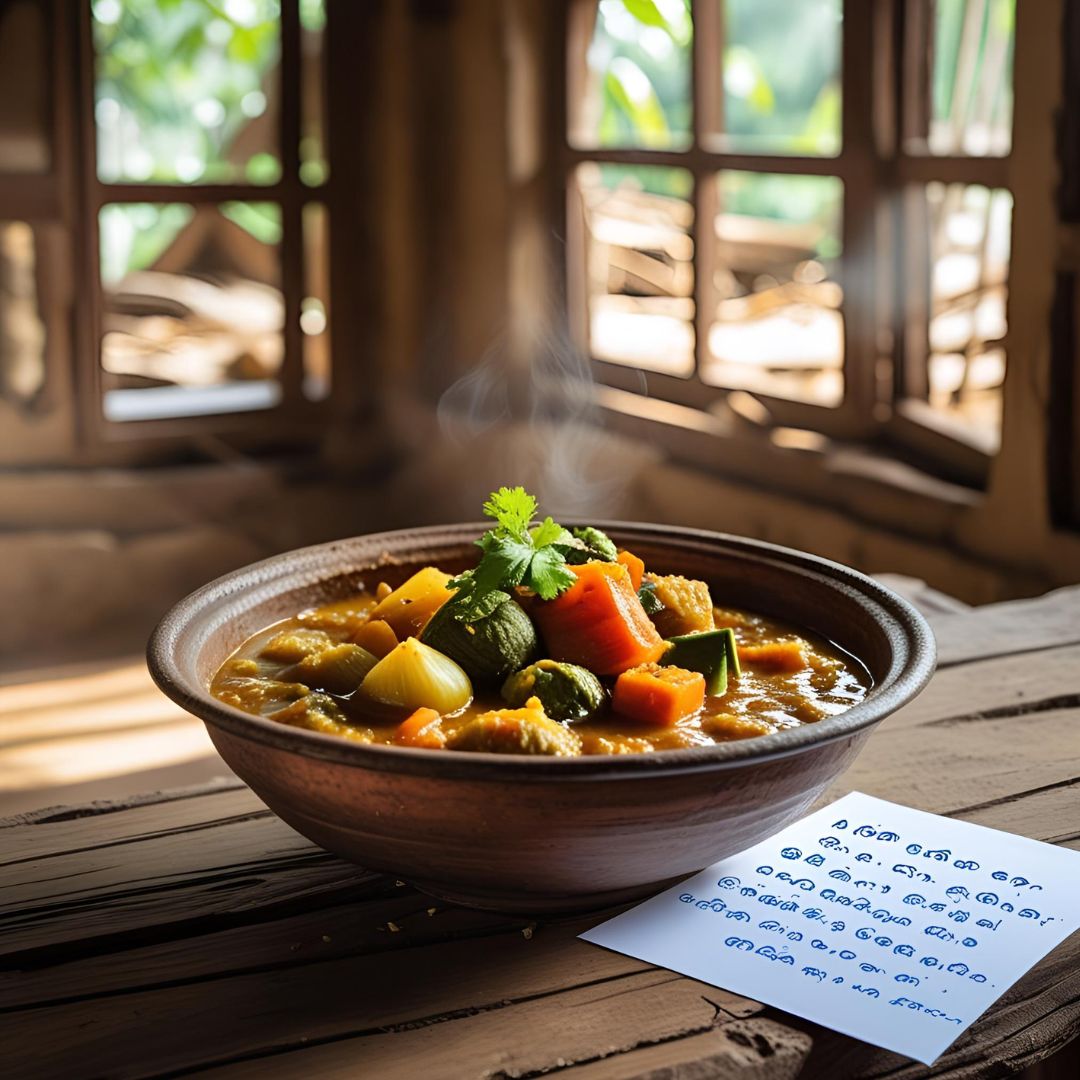
This came to me while eating my amma’s sambar,
thinking about the quiet work we all do.

Some people call it “just sambar.”
I see it differently.

Because that sambar didn’t just appear.

It had:
Potato. Carrot. Tomato. Drumstick. Brinjal. Banana.
Ladyfinger. Dal. Onion. Green chilli. Curry leaves.
And one thing no one mentions — Amma’s quiet care.


She chopped. She waited.
She adjusted the salt. Tasted once.
Then added a pinch of something without telling anyone.
Because she knows who’ll eat it.

That’s not just cooking.
That’s awareness.
That’s consistency.
That’s love without announcing itself.

And I suddenly felt:
Maybe my work is like that too.
Maybe yours is.

You help a teammate.
You fix something small no one saw go wrong.
You hold the balance quietly—without being asked, or thanked.

That’s sambar.
It doesn’t stand alone.
But it makes everything feel better.

So today, if you’ve done something quietly—
for your team, your family, your people…

You’ve made the sambar.

Someone will feel it.
Maybe not today.
But it’s already there.

You’re not invisible.
You’re just working like sambar does—
quiet, steady, essential.


From
— Lekshmana
(Just writing from what I felt.)

Let’s celebrate the quiet wins!

🔹 Building in a Way That Lasts Without You

Building strong, together. This is how we make things last.

Some people say, “Be so good they can’t ignore you.
That’s fine. But some of us live by something else:

“Be so open, they don’t need to depend only on you.”

I don’t want to be the only one who holds the answer.
I want to be part of something that runs well—even when I’m not around.

Sometimes that means writing one extra note in the code.
Sometimes it means letting someone else handle a tough call, even if I could do it faster.
This approach often means trading immediate speed for long-term resilience.
It’s a conscious decision, especially in critical moments, to grow others—even if it adds a little time.

Sometimes, it’s just quietly teaching the same thing again—and again—until someone else gets it.

That’s not stepping back. That’s building forward.
It doesn’t mean avoiding responsibility—it means sharing it in a way that others grow.

This kind of “building” isn’t about being hands-off.
It actually takes more effort—writing things clearly, creating good systems, coaching people patiently.

And no, it’s not always perfect.
There are days I forget to document.
There are moments I want to just finish it myself—because it’s easier.

But I remind myself:
If only I can do it, I haven’t really built it yet.

🌱 What I try to do:

  • Share context, not just tasks.
  • Teach slowly, even when I’m in a rush.
  • Write things others can pick up.
  • Step away without everything falling.
  • Support those stepping up with room to learn.

It also means creating space where others can point out what’s breaking, or what needs rethinking—even if I was the one who started it.

This applies outside work too.
At home, I try to involve others.
Let someone else lead.
Let kids learn by trying.
Let systems breathe without me at the center.

It’s not about disappearing.
It’s about making sure nothing disappears because of me.

This isn’t about being humble for praise.
It’s about keeping what we build alive—through others.

🧭 Like Pi, good systems don’t need every digit to be perfect.
They just need enough people who care to continue it.
One digit joins. Another follows.

That’s how it grows.


Build something that continues—even if your name isn’t mentioned.
Teach someone in a way that they forget you were the one who taught it.
If it grows through others, it means you did it right.
That’s the kind of legacy I care about.

– from me,
Lekshmana

🪷 Education doesn’t just shape careers. It shapes roots.

Where I come from,
education didn’t arrive with celebration.

It arrived through effort.
Through quiet pushes.
Through families doing their best with what they had.

We didn’t talk about “success.”
We just hoped things wouldn’t stay the same.

Sometimes, the whole family quietly adjusts their life,
so one person can keep studying.

It wasn’t always fair.
But it was real.

And for many of us—it worked.

Because education, when held with care and values,
doesn’t just help one person rise.
It lifts a whole family.
It lights the path for future generations.
It lets you speak with confidence,
choose with clarity,
and one day—guide someone else.

It’s not just for getting a job.
It’s how I learned to think.
To lead.
To help.

That’s why I still remember the blackboard in my HSC school.
It didn’t say “achieve more” or “be first.”
It said:

பணிவு. ஒழுக்கம். முயற்சி.
Humility. Discipline. Hard work.

Those three still guide me more than any certificate I’ve earned.

Yes, money can be a barrier.
But I’ve seen families and students fight through it.
With support. With effort. With belief.

If you’re studying now—keep going.
If you’re guiding someone else—keep showing up.
If you’ve ever made space for someone to learn—thank you.

Because education doesn’t end with one person.
It grows outward—quietly, like roots.
And it carries forward—quietly, like a pattern.
Like the digits of Pi—it continues, one to the next, without needing applause—only continuity.

Until a house, a street, or a village starts to feel different.

That’s it for now.
Just trying to add my digit.
from a quiet classroom where roots started growing.

🔸 Reminder:
If you’ve studied with intention, supported someone, or still believe in learning—
you’ve already added to something bigger.

Education—paired with the right values—doesn’t just change a life.
It strengthens a generation.Let’s keep building that.
Quietly. Clearly. Together.

🧑🏽‍🏫 How I Teach, Guide, and Mentor—Wherever I Am, Even in Small Moments

These days, I’ve started to notice how I guide others—and why I do it differently than before.

It’s not something I planned.
It’s not something I learned in one place.
It came from years of seeing, learning, making mistakes, and slowly understanding:

“When someone trusts you to guide them—even for five minutes—it matters how you show up.”

Now, whether I’m reviewing work, answering a question, teaching something new, or correcting a mistake—
I do it differently than I used to.

I slow down.
I try to understand what they already know, where they’re stuck.
I don’t explain to show what I know.
I explain so they can move forward with more clarity and less doubt.

I don’t give everything at once.
Sometimes I wait.
Sometimes I just ask something back—to help them think through it themselves.

Because it’s not about giving answers.
It’s about helping them believe they can find the next one.
——

The label doesn’t matter.
It might be called mentoring at work.
It might be called parenting at home.
It might just be a one-time interaction with someone younger or unsure.

But for me, it’s all the same work:

“To help people learn—not just what to do,
but how to trust themselves more as they do it.”
——

I’ve also learned not to over-correct.
If something’s wrong, I say it directly—but with care.
Not because I want to soften the truth,
but because I’ve seen that how you speak often stays longer than what you said.

Even when someone doesn’t ask for guidance directly,
I try to notice.
If someone’s lost, quiet, or unsure—I just let them know I’m here.
That small check-in sometimes opens the door.
——

You don’t need to lead a team to do this.
You don’t need to call yourself a mentor.
If you’ve ever explained something to someone, or helped them understand better—
you’ve already started this work.

The question is: “how will you keep doing it?”
It’s not about time.
It’s about intention.
A small sentence. A moment of patience.
The right pause before correction.
The confidence you pass without saying much.
All that matters.
——

Still learning from every time I guide.
Still improving how I explain.
Still staying with it—one question, one step, one person at a time.

Still adding my digit.
—from me,
Lekshmana

🔹Side note:
My approach to guidance, characterised by calmness, clarity, and care, consistently applies across all interactions.
This includes both day-to-day moments and more focused guidance like skill development, career pathing, or navigating difficult choices.
The way I hold it doesn’t change.

🌱 Even Small Moments Carry Joy—If You Let Them

I don’t think joy announces itself.
It doesn’t come with music or milestones.
It comes in the middle of regular days—
if you stay close enough to notice.

It’s something I had to learn to see.
Not all at once—but slowly, over time.

For me, it shows up in many places:

When someone on my team gets recognized, and they look a little surprised but proud

When a friend calls just to ask, “Are you okay?”

When a small act of help actually reaches someone who needed it—not for thanks, just to know they felt supported

When my son says something wild, and I pause—not just to laugh, but to admire how he sees the world

When I sit in silence without guilt

When someone says, “Because of what you said that day, I tried again.”

These aren’t rewards.
They’re reminders.
That I’m still part of something—quietly, meaningfully.

That doesn’t mean joy is always sitting in front of me.

Some days I feel flat.
Some days I overthink.
Some days I keep doing, without feeling much.

But even on those days—joy isn’t gone.
It’s just quiet. Waiting. Somewhere under everything else.
And the more I stay close to what matters, the more often it returns.

Not as noise.
As presence.

Joy isn’t something I perform.
It’s something I protect.

I don’t chase it.
I notice it.
In little things I’m part of.
In small good that keeps moving through people.
In effort that feels real, even when no one sees it.

And over time, I’ve learned—this kind of joy doesn’t fade easily.
Because it’s not tied to big wins.
It’s built from small truths, lived fully.

That’s the kind I’m holding now.

Still learning.
Still living through it.
Still adding my digit.

– from me,
Lekshmana